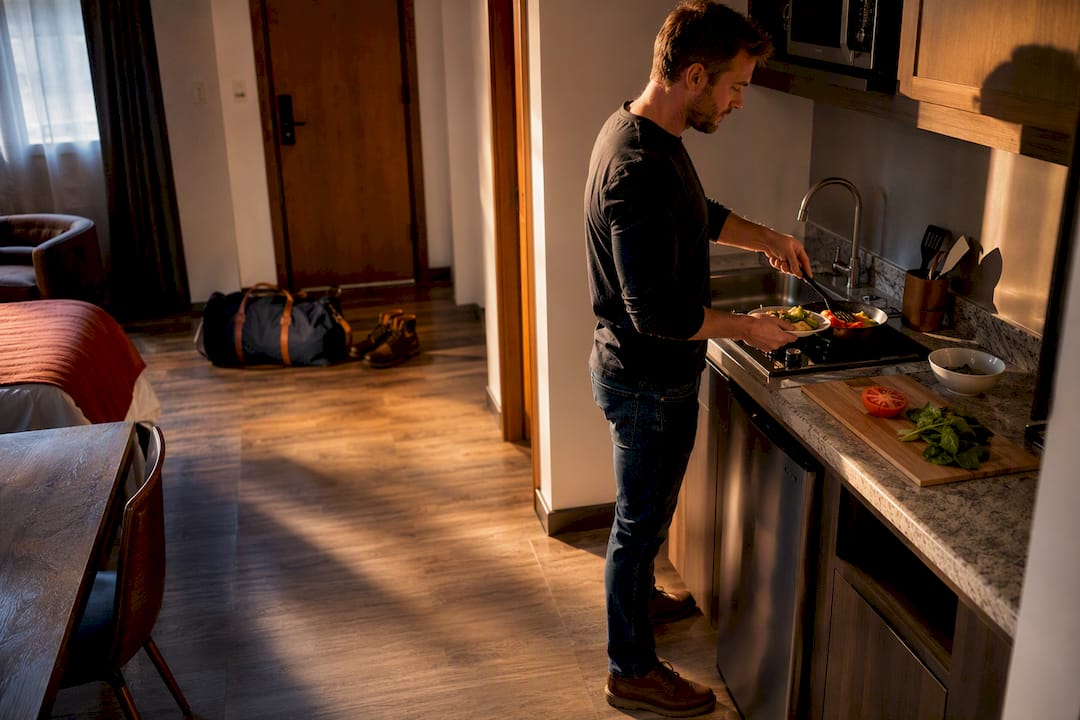
For a stay running two weeks to several months, an extended-stay hotel or lodge usually beats Airbnb on cost predictability, on-site support, and expense documentation. Airbnb can still win when you need more square footage or a specific neighborhood, but only if you verify Wi-Fi speed, receipt format, and the extension policy before you book. The sections below break down the costs, amenities, flexibility, and safety trade-offs, plus a checklist to match your situation to the right choice.
TL;DR:
- Extended-stay hotels typically offer bundled monthly rates that include utilities and Wi-Fi, providing more cost predictability for stays longer than two weeks.
- Airbnb charges additional fees such as cleaning, service, and extra-guest charges, which can make the effective nightly rate significantly higher than advertised, especially over a month.
- Reliable Wi-Fi in extended-stay properties is generally standard and verified, while Airbnb hosts often do not pre-test or guarantee upload speeds, risking remote work needs.
- Flexibility in extending or canceling stays is usually more straightforward at extended-stay hotels with 24 to 48-hour notice, compared to variable Airbnb policies depending on individual hosts.
- When accessibility matters, hotels are more consistent with ADA standards, while Airbnb listings vary in accuracy and self-reporting reliability.
Table of Contents
- Airbnb vs Extended Stay: A Quick Side-By-Side
- What Does a 30-Night Stay Actually Cost?
- How Do Amenities and Service Compare Day to Day?
- Can You Extend or Cancel Easily If Plans Change?
- Is One Option Safer or More Reliable Than the Other?
- Which Option Fits Your Situation?
- How Does an Extended-Stay Lodge Like Mesquite Oasis Measure Up?
- Are These Options Accessible for Travelers With Disabilities?
- What Actually Matters When You’re Choosing
- Check Rates and Apply for Your Stay Online
- Sources
- FAQ
Airbnb vs Extended Stay: A Quick Side-By-Side
The two models split cleanly once you look past the nightly rate. Extended-stay properties build long stays into their pricing and staffing; Airbnb was built for weekend trips and bolts on long-stay accommodations listing by listing.
- Cost structure: Extended-stay weekly and monthly rates typically fold in utilities and Wi-Fi; Airbnb adds cleaning fees, service fees, and sometimes extra-guest charges on top of the nightly rate.
- Kitchen and laundry: Extended-stay rooms usually include a full or partial kitchen and on-site laundry; Airbnb varies from a full kitchen to a hot plate, and laundry access depends entirely on the listing.
- Service model: Extended-stay properties have front-desk staff and maintenance on call; Airbnb runs on host messaging, which can mean a fast reply or a slow one.
- Best for: Extended stay fits predictable, work-driven assignments. Airbnb fits stays where space, location, or a specific setup matters more than standardized service.
What Does a 30-Night Stay Actually Cost?
Run the math past the nightly rate, and the picture changes fast. Airbnb’s advertised price rarely reflects what you pay at checkout.
- Start with the base rate, then add the cleaning fee (often a flat charge regardless of stay length) and the service fee, which platform-level fee structures commonly stack on top of the nightly price.
- Check for extra-guest fees if more than one person is staying, since some hosts charge per additional occupant.
- Compare that total to a weekly or monthly extended-stay rate, which commonly bundles utilities, Wi-Fi, and laundry access into one number instead of itemizing them separately.
- Ask for a long-stay quote in writing from either option. Hosts frequently discount for 28+ night stays, but that discount only shows up if you ask.
Statistic Callout: Housing cost predictability matters more than most travelers assume for stays over a few weeks. The Bureau of Labor Statistics’ data on rental housing patterns shows how much weight consistent monthly costs carry once a stay stretches past a few weeks, which is exactly why extended-stay’s bundled monthly rate tends to out-plan an itemized Airbnb bill over a full month.
A 30-night Airbnb stay might list at $55 a night, but by the time cleaning and service fees land on the final invoice, the effective nightly rate often runs noticeably higher than what the search results promised.
How Do Amenities and Service Compare Day to Day?
Kitchen access changes your grocery bill more than almost anything else on this list. A full kitchen means real meals instead of takeout every night; a kitchenette with a microwave and mini-fridge means you’re eating out more than you planned.
Laundry works the same way. In-unit laundry saves a weekly trip somewhere else; shared on-site laundry (common at extended-stay properties) still beats hauling clothes to a laundromat, which some Airbnb listings require.
Wi-Fi reliability deserves its own scrutiny, especially for remote work. Some Airbnb hosts now publish tested Wi-Fi speeds directly in the listing, but that data is optional and inconsistent across properties. Extended-stay properties generally treat Wi-Fi as a baseline utility, not a bonus feature.
- Housekeeping: Extended-stay hotels often clean on a set schedule; Airbnb rarely includes housekeeping during your stay unless you pay extra.
- Privacy: Airbnb generally offers more privacy since you’re not sharing common spaces with staff walking through daily.
- Maintenance: A broken AC unit gets a same-day fix from hotel maintenance staff; a broken AC unit in an Airbnb depends on how fast the host responds.
Pro Tip: Before booking either option for work travel, run a speed test question past the host or ask the front desk directly. “What’s your average upload speed?” gets a more useful answer than “Do you have Wi-Fi?”
Can You Extend or Cancel Easily If Plans Change?
Extended-stay hotels typically run on 24 to 48 hours’ notice for extending or shortening a weekly booking, which makes adjusting your assignment length straightforward. Airbnb cancellation and extension terms vary listing by listing, and tourism experts note that hotel-style bookings generally offer simpler extension mechanics than individually managed rental listings.
That variability isn’t a flaw in Airbnb’s model. It’s just the tradeoff for renting from an individual host instead of a standardized front desk.
Before locking in either option, confirm:
- Whether receipts itemize nightly rate, fees, and taxes separately
- The late check-in policy and whether anyone will be on-site to let you in
- The exact extension procedure and how much notice it requires
- The refund window if your assignment ends early
Is One Option Safer or More Reliable Than the Other?
Hotels operate under routine inspections, building codes, and on-site security, plus staff who are there around the clock. Short-term rentals answer to a patchwork of local regulations that vary by city and depend heavily on individual host practices.
Receipts are where this gap shows up most for business travelers. Hotel folios are standardized and built for expense reporting; Airbnb receipts vary in format and sometimes require asking the host directly for an itemized breakdown.
- Photograph any damage or issue immediately, with a timestamp visible
- Save every message exchange with the host or front desk
- Contact platform support in writing, not just by phone, to create a paper trail
- Vrbo and similar platforms publish host and guest protections, but those protections support a claims process. They don’t replace someone at a front desk who can fix the problem in person.
Which Option Fits Your Situation?
Match your own priorities against this checklist before you book anything:
- Are your dates locked or still flexible? Locked dates favor extended-stay’s simpler extension process; flexible dates give Airbnb’s variable policies less risk.
- Do you need a full kitchen or extra square footage? If yes, weight toward Airbnb, but confirm the kitchen photos match reality.
- Does your employer require itemized receipts? Extended-stay folios generally make this painless; Airbnb requires more upfront verification.
- Is verified Wi-Fi non-negotiable? Ask for documented speeds either way, but extended-stay’s on-site infrastructure is the safer default.
- Traveling with pets or need a specific neighborhood? This is often where Airbnb’s flexibility earns its keep.
Three quick profiles show how this plays out. A remote worker on a six-week contract who needs steady Wi-Fi and no billing surprises fits extended-stay almost every time. A travel nurse on a 13-week assignment juggling reimbursement paperwork benefits from the standardized folios that tailored comparisons for healthcare travelers consistently favor. A family relocating for two months who needs three bedrooms and a real kitchen may find Airbnb is the only option that fits, provided they verify the listing carefully first.
The one-sentence rule: if predictability matters more than square footage, choose extended-stay; if space matters more than predictability, choose Airbnb and verify everything in writing first.
How Does an Extended-Stay Lodge Like Mesquite Oasis Measure Up?
Mesquite Oasis Lodge & RV Park in Odessa, Texas, illustrates what the checklist above looks like in practice. The property offers furnished lodge rooms with utilities included, alongside 241 full-hookup RV sites for workers who bring their own rig.
Booking, applications, and payments run entirely online, available around the clock, which removes the back-and-forth that slows down both Airbnb inquiries and traditional hotel phone reservations. Guests access laundry, gym, and recreational areas using a personal PIN code, which gives the same secure, on-site infrastructure a front desk provides without requiring a staffed lobby at 2 a.m.
For contractors and crews on assignment in the Permian Basin, that combination of billing clarity, maintenance response, and amenity access maps directly onto what medium-to-long stays need most.
Are These Options Accessible for Travelers With Disabilities?
Accessibility often gets treated as an afterthought in this comparison, but it shouldn’t be. Extended-stay hotels are generally required to meet ADA accessibility standards for common areas, room features, and pathways, since they operate as commercial lodging under building codes that apply to hotels broadly. That means ramps, accessible bathrooms, and grab bars are typically standardized and inspected, not left to individual discretion.
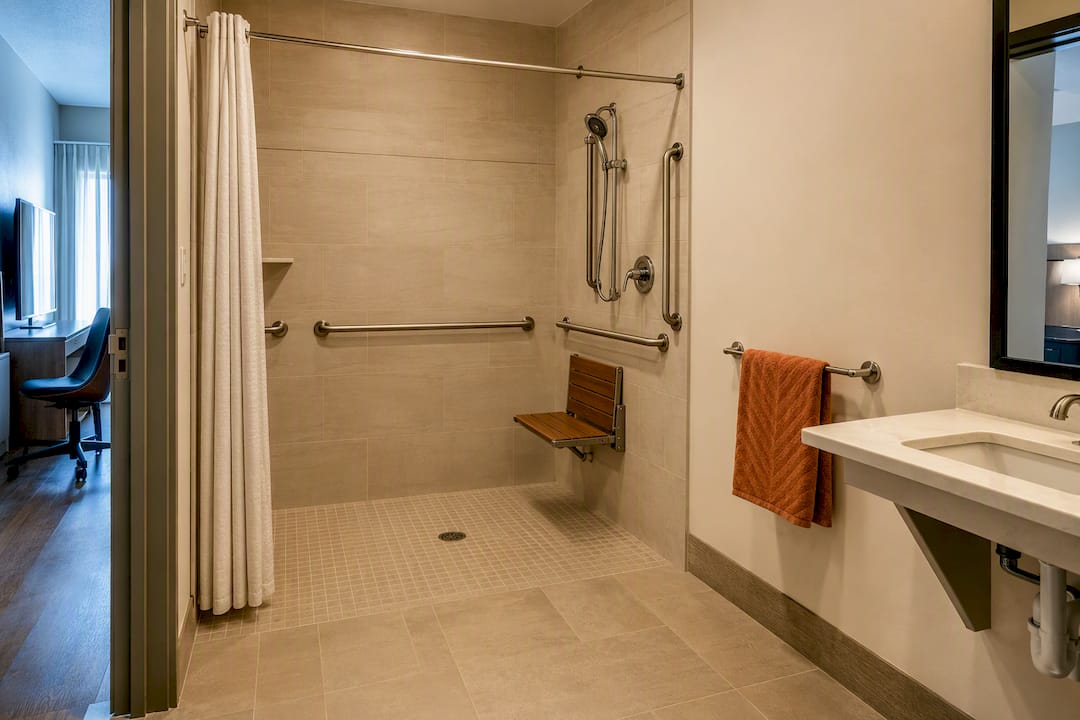
Airbnb accessibility is far less consistent. Some hosts list accessibility features accurately (roll-in showers, step-free entries, wide doorways), but the platform relies on host self-reporting rather than code inspection. A listing photo can misrepresent a doorway width or a step you won’t discover until you arrive.
If accessibility is a hard requirement, ask direct questions before booking either option: What’s the doorway width? Is there a step at the entrance? Is the bathroom equipped with grab bars, and is the shower roll-in or step-in? Extended-stay properties can usually answer these clearly because the room specs are fixed and documented. Airbnb hosts may need to check and get back to you, which adds a delay you don’t want the week before a move.
Properties built for long-term crew housing, including Mesquite Oasis, generally maintain accessibility information as part of their standard booking process, since consistent room specs matter for guests planning weeks or months in one place.
What Actually Matters When You’re Choosing
Most comparisons treat this decision like a spreadsheet exercise: line up the nightly rates, tally the fees, pick the lower number. That misses the real cost driver for a multi-week stay, which is friction, not dollars. A $10 nightly savings on Airbnb evaporates fast if you spend three days chasing a host for a Wi-Fi answer or a corrected receipt.
The travel nurses and contractors who get this right treat verification as part of the booking process, not an afterthought. They ask for the quote in writing. They confirm the receipt format before the first night, not after the assignment ends and finance asks questions. That habit matters more than which platform they ultimately choose.
Check Rates and Apply for Your Stay Online
If steady billing and on-site support matter more to you than chasing down a host for answers, Mesquite Oasis Lodge & RV Park gives you both without a single phone call.

The property offers 241 full-hookup RV sites and 110 furnished lodge rooms with utilities and Wi-Fi built into the rate, plus laundry, a gym, and recreational areas accessible by personal PIN. Stay application, payment, and booking processes run online and around the clock, allowing guests to secure nightly, weekly, or monthly accommodations efficiently. Before you commit, check current rates and availability and review the cancellation and refund policies for your planned length of stay. If you’re ready to move forward, apply and pay online to secure your spot.
Sources
- BLS Spotlight: Housing leases in the U.S. rental market
- Ohio University: Airbnb or hotel stay? Tourism expert shares what to consider
- Vrbo
- Extended Stay vs Airbnb vs Standard Hotel: Which Fits 2–12-Week Assignments Best?
FAQ
Which Is Cheaper, Extended Stay or Airbnb?
Extended-stay hotels are usually cheaper over a full month once you account for Airbnb’s cleaning fees, service fees, and any extra-guest charges stacked onto the nightly rate.
What Is the 80/20 Rule for Airbnb?
There’s no verified, standardized “80/20 rule” tied to Airbnb policy. If you’ve seen this term, it likely refers to informal host income-splitting or occupancy guidance rather than an official platform rule, so treat any specific claim about it with caution.
Why Are People Leaving Airbnb?
Rising cleaning and service fees, inconsistent host responsiveness, and unpredictable cancellation policies push travelers who need reliable multi-week stays toward extended-stay hotels or lodges with standardized service.
What Is the 75-55 Rule in Airbnb?
There’s no confirmed rule recognized as official Airbnb policy. Definitions circulating online vary and aren’t backed by a documented platform standard, so it’s best not to rely on this as established guidance.
Is Mesquite Oasis a Good Fit for a Multi-Month Work Assignment?
Yes. Its furnished lodge rooms and full-hookup RV sites include utilities and Wi-Fi, with online booking available around the clock and PIN-based access to amenities, built for contractors and crews on extended assignments.


