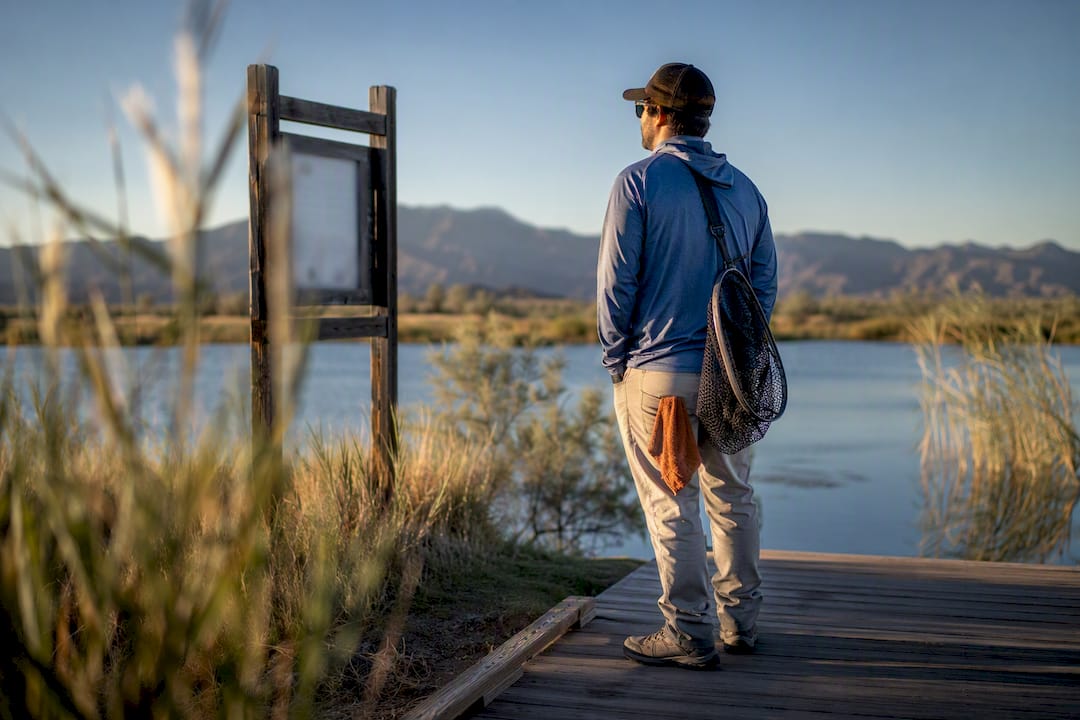
A catch-and-release pond is a fishery where every fish caught must go back in the water, usually governed by strict gear rules like single barbless hooks and no live bait. Most operate dawn to dusk. Before you make a cast, check the posted signage or park website, since rules shift from pond to pond and breaking them can mean a fine or a revoked permit.
TL;DR:
- Most catch-and-release ponds require single barbless hooks, no live bait, and daylight-only fishing to maximize fish survival.
- Proper catch-and-release techniques include minimizing air exposure, keeping fish wet, and supporting them horizontally to reduce stress and injury.
- Ponds are carefully managed through stocking schedules and habitat adjustments to prevent overpopulation and support healthy fish growth.
- Always verify specific rules, species stock information, and access details for each pond before visiting to ensure compliance and a successful trip.
- Responsible handling and adherence to regulations help sustain Fish populations, especially in high-traffic or urban waters where overfishing is a concern.
Table of Contents
- Typical Rules at Catch-and-Release Ponds and Why They Exist
- Where to Find a Catch-and-Release Pond Near You
- How Do You Properly Catch and Release a Fish?
- How Pond Management Shapes Your Fishing Experience
- Pre-Visit Checklist for a Catch-and-Release Pond
- Why Catch-and-Release Ponds Matter for Conservation
- Common Fish Species in Catch-and-Release Ponds and How to Handle Them
- Why Responsible Catch-and-Release Matters
- Fish a Stocked Pond Without Leaving Your Own Backyard
- Where to Check Rules and Best Practices
- Sources
- FAQ
Typical Rules at Catch-and-Release Ponds and Why They Exist
Every catch-and-release pond runs on a version of the same short list of rules, and none of them are arbitrary. Barbless hooks slide out cleanly, which cuts down on torn membranes and jaw damage. Bans on live bait exist because live bait tends to get swallowed deeper, and a fish hooked in the throat or gut has a far worse shot at survival than one hooked in the lip. Daylight hours protect staff schedules and give fish a break from pressure outside of fishing times.
Common rules you’ll run into at most sites:
- Catch-and-release only, with no exceptions for “just one keeper”
- Single barbless hooks required on flies and lures (some ponds allow crimping your own barbs down)
- No live bait, and sometimes no bait fishing at all
- Fishing limited to daylight hours
- A valid fishing license required, though some park ponds carve out youth exemptions
The National Park Service notes that catch-and-release, done correctly, produces high survival rates. But “correctly” is doing a lot of work in that sentence, and the rules are how a pond manager tries to guarantee it. Rules also exist for a less obvious reason: they keep the fishery interesting. A pond that lets everyone keep their catch gets fished out fast, and the next angler through the gate gets nothing.
Never assume a pond’s rules match the last one you fished. Check the park’s own web page, read the signage at the parking lot or dock, and ask staff if anything is unclear. Rules change with stocking cycles, water levels, and even seasonal closures for spawning.
Where to Find a Catch-and-Release Pond Near You
Catch-and-release ponds appear in a few recognizable formats. Each type tends to list slightly different information on its web page or signage.
- Municipal park ponds like the Bob Gerding Catch and Release Pond at Tingley Beach in Albuquerque, which restricts anglers to flies and lures with single barbless hooks and posts that policy directly on the park’s site.
- Attraction and resort ponds, such as the catch-and-release pond at Tussey Mountain in Pennsylvania, where fishing is tied into a broader recreation destination rather than standing alone as a dedicated fishery.
- RV resort and community ponds, like the catch-and-release pond in San Tan Valley, Arizona, where stocked water functions as a resident amenity tied to a housing or resort development rather than a public park.
What separates a useful listing from a frustrating one is detail. A good pond page tells you which species are stocked and when, what hours apply, whether there’s a fee, and whether rods or nets are available to rent on-site. It should also list a phone number or contact form for questions that the web page doesn’t answer.
Before you drive out, use that listing to sort out the logistics that ruin a trip if ignored: where you’re allowed to park, whether the dock or bank access is ADA compliant, and whether the pond has a youth license exemption that applies to your situation. A ten-minute check saves an hour of standing at a locked gate.
How Do You Properly Catch and Release a Fish?
Survival comes down to speed and gentleness, and the gap between doing it right and doing it wrong is bigger than most anglers assume. Here’s the sequence that gives a released fish its best shot:
- Fight the fish efficiently. Don’t play it to exhaustion. A quick fight means less lactic acid buildup and a faster recovery.
- Keep it in the water. Unhook fish at the surface whenever you can, rather than hauling them onto the bank or into a boat.
- Wet your hands or use a rubberized, knotless net before you touch the fish. Dry hands and standard mesh nets strip away the protective slime layer that guards against infection, according to NOAA’s catch-and-release guidance.
- Minimize air exposure. A rough rule of thumb from NOAA: don’t hold a fish out of water longer than you can comfortably hold your own breath.
- Support the fish horizontally. Never lift a fish vertically by the jaw. That position stresses the spine and internal organs in ways a horizontal cradle avoids.
- Remove the hook fast. Needle-nose pliers or hemostats work for hooks you can reach. If a fish is hooked deep in the throat, cut the line instead of digging around, since NOAA data shows the fish’s odds are better with a hook left in place than with prolonged extraction.
- Revive before release. Hold the fish gently in the water, facing into any current, until it swims off under its own power.
Pro Tip: Snapping a photo? Keep the fish in the water until the camera’s ready, then lift it for no more than a few seconds. A fish “held for the picture” too long often can’t recover, even if it swims away looking fine.
Barotrauma deserves its own warning. Fish pulled up fast from deep water can suffer a swollen swim bladder and internal injuries that a normal release won’t fix. North Dakota Game and Fish explains that specialized descent devices are often needed to return a deep-caught fish safely, and some states restrict or discourage anglers from attempting it without training. If you’re fishing a pond with real depth and you’re not equipped for that, it’s worth thinking twice before targeting deep structure.
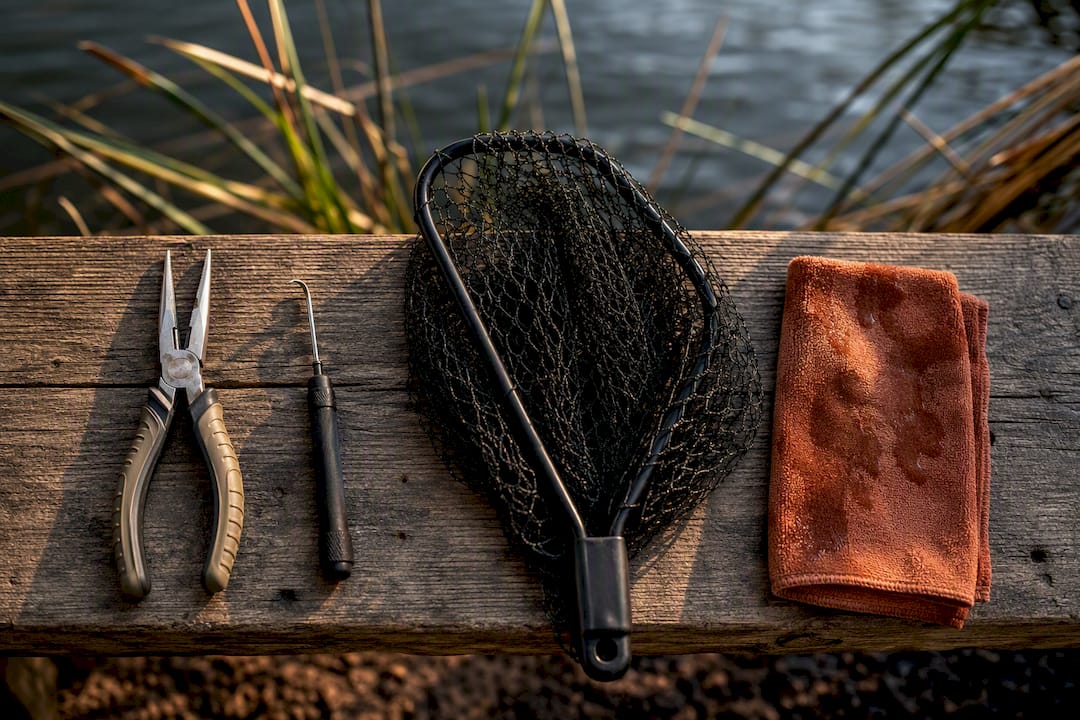
Carry a small kit every time: needle-nose pliers, a hook remover, a rubberized net, and a wet cloth or de-hooking mat. None of it is expensive, and all of it matters more than your rod.
How Pond Management Shapes Your Fishing Experience
The quality of a catch-and-release pond doesn’t happen by accident. Managers stock species on a schedule built around water temperature and growth rates: trout typically go in during cooler months and get fished hard through a limited season, while bass, sunfish, and catfish tend to hold up year round in warmer water.
Left alone, ponds drift out of balance fast. Too many sunfish crowd out everything else and start reproducing faster than the food supply can support, leading to a population of small, stunted fish nobody wants to catch. Bass populations can do the same thing in reverse, growing too numerous and too skinny. According to the Alabama Cooperative Extension System, the fix usually involves one of a few tools:
- Adjusted harvest rates to thin out an overabundant species
- Targeted restocking to rebuild a species that’s fallen behind
- Partial or full pond renovation in severe cases, which resets the fish population entirely
Major renovation work is a job for trained fisheries staff, not a weekend project, so any pond considering it typically brings in a state fisheries agency. Some ponds stay catch-and-release permanently specifically to protect a stocked trout population or maintain a “quality fishery” where fish get the chance to grow larger before facing pressure again.
Pre-Visit Checklist for a Catch-and-Release Pond
A few minutes of prep beats a wasted trip. Run through this before you leave the house:
- Confirm hours and rules on the pond’s official page or by calling ahead. Dawn-to-dusk is common but not universal.
- Check license requirements for your age group and location. Some park ponds waive licenses for kids under a certain age, but rules vary by jurisdiction, so don’t assume.
- Pack barbless-hook gear, or bring pliers to crimp your own barbs flat if the pond allows it.
- Bring a rubberized net, wet cloth or gloves, and a camera you can access quickly for the rare, brief photo.
- Plan to fish efficiently, not leisurely. Stay near your gear, land fish quickly, and keep any handling or photo time as short as possible.
Why Catch-and-Release Ponds Matter for Conservation
A single catch-and-release pond does more ecological work than its size suggests. Because fish stay in the water instead of leaving in a cooler, the same population can support far more fishing trips per year than a harvest fishery of equal size. That matters most for slow-growing or long-lived species, where losing breeding-age fish to harvest can shrink a population for years.
Catch-and-release also functions as a buffer against overfishing pressure near cities, where a handful of ponds absorb thousands of visits a season. Without a release requirement, those waters would get stripped of catchable fish within weeks of a stocking event. Practiced well, catch-and-release keeps a fishery self-sustaining instead of dependent on constant restocking, though some fisheries scientists caution that repeated recapture of the same long-lived individuals can still add up to real population stress, especially in smaller or heavily fished waters. That’s part of why gear restrictions and hook-type rules exist at all. A pond isn’t just protecting the fish you catch today. It’s protecting the fish someone else catches next month, and the one after that.
Common Fish Species in Catch-and-Release Ponds and How to Handle Them
Most catch-and-release ponds are stocked with a small, predictable set of species, and each one comes with its own handling quirks.
Rainbow trout dominate cooler-water ponds and are notoriously delicate. Their gills and skin are sensitive to warm hands and dry air, so speed matters more with trout than almost any other species commonly stocked.
Largemouth and smallmouth bass tolerate handling better, but their strong jaw muscles make a lip-grip common. That’s fine briefly, but never use it to hold the fish’s full weight vertically for long. Support the body too.
Bluegill and other sunfish are small and often swallow hooks deeper than anglers expect, given how aggressively they strike. Barbless hooks and a quick hand with pliers matter most here.
Channel catfish have sharp pectoral spines that can injure an angler’s hands as much as the reverse. A rubberized net and a firm grip behind the head keep both fish and angler safer.
Whatever the species, the handling fundamentals stay the same: wet hands, minimal air time, and a horizontal hold. The differences are mostly about what can go wrong faster, not what to do differently.
Why Responsible Catch-and-Release Matters
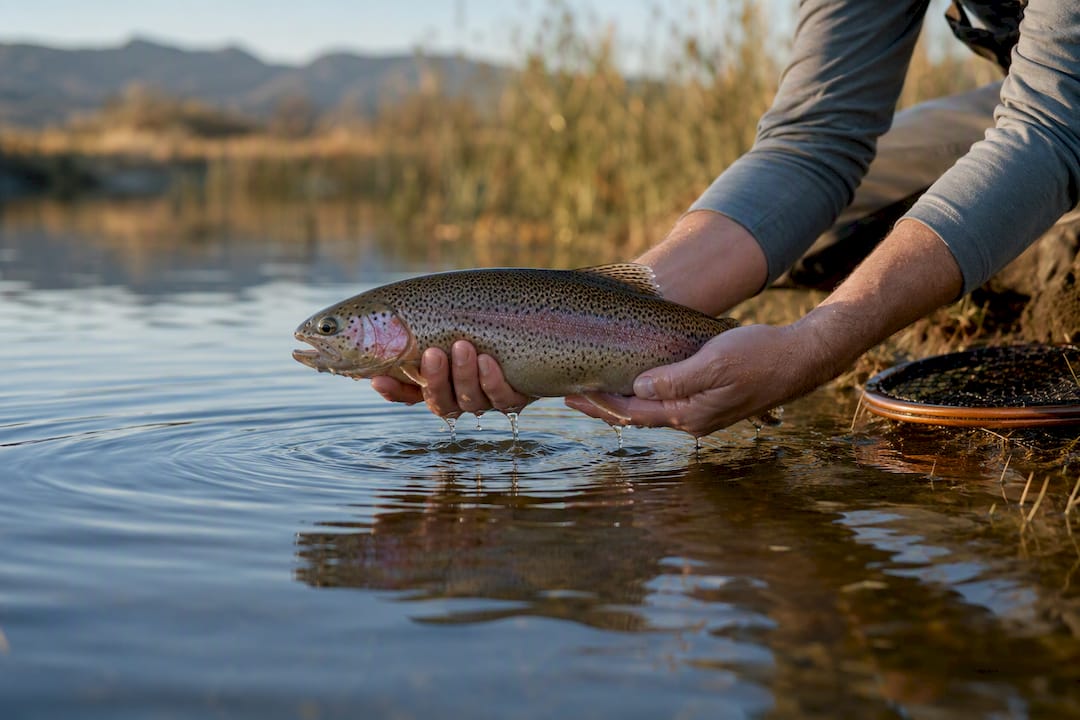
Catch-and-release isn’t a rule you follow to avoid a fine. It’s an ethic that keeps a pond worth visiting next season. Every angler who handles a fish gently, checks the signage, and carries the right gear is quietly keeping the water stocked for the next person in line.
Fish a Stocked Pond Without Leaving Your Own Backyard
Some RV resorts and communities offer stocked fishing ponds on their properties, so guests don’t need to drive far after a shift to wet a line, illustrating the role of food in hospitality as an integral part of on-site guest recreation. Between the RV sites and the furnished lodge rooms, guests get access to a full slate of on-site recreation, including the pond, alongside a gym, basketball court, and pool, without ever leaving the gate.

For crews and contractors working long rotations in the Permian Basin, that on-site access solves a real problem: there’s often no time or energy left to scout a public pond after a 12-hour shift. Some RV parks and lodges offer entirely online booking, application, and payment processes that you can complete on your phone at any time, without waiting on hold. If you’re already comparing extended-stay options in Odessa, check current rates and availability and see whether a site with its own fishing pond fits your next assignment better than a standard motel room ever could.
Where to Check Rules and Best Practices
For current regulations and handling guidance, check NOAA’s catch-and-release resources, the National Park Service’s fishing pages, and your state fisheries agency.
Sources
- Catch-and-release fishing best practices — NOAA
- Catch and release fishing — National Park Service
- Understanding barotrauma — North Dakota Game and Fish
- Management of recreational fish ponds — Alabama Cooperative Extension System
- Bob Gerding Catch and Release Pond — ABQ BioPark (Tingley Beach)
FAQ
Can I Just Catch Fish and Release Them Anywhere?
Not always. Some waters require harvest of invasive or overpopulated species, and a handful of jurisdictions restrict catch-and-release for specific fish like certain deep-water species due to barotrauma concerns, so always check local regulations before assuming release is allowed.
What Is the 80/20 Rule in Fishing?
It’s an informal observation that roughly 80% of the fish in a given water come from about 20% of the available spots, which is why locating structure and feeding zones matters more than simply covering water.
How Do You Properly Catch and Release a Fish?
Fight the fish quickly, keep it in the water as much as possible, wet your hands before touching it, avoid lifting it vertically by the jaw, and get it back in the water within the time you could comfortably hold your own breath, according to NOAA guidance.
Where Is Catch-and-Release Fishing Illegal?
Catch-and-release itself is rarely illegal, but some states and parks restrict or regulate the release of fish caught from deep water because of barotrauma risk, and a few fisheries mandate harvest of certain invasive species rather than release; check your state’s specific guidance before fishing deep structure.


