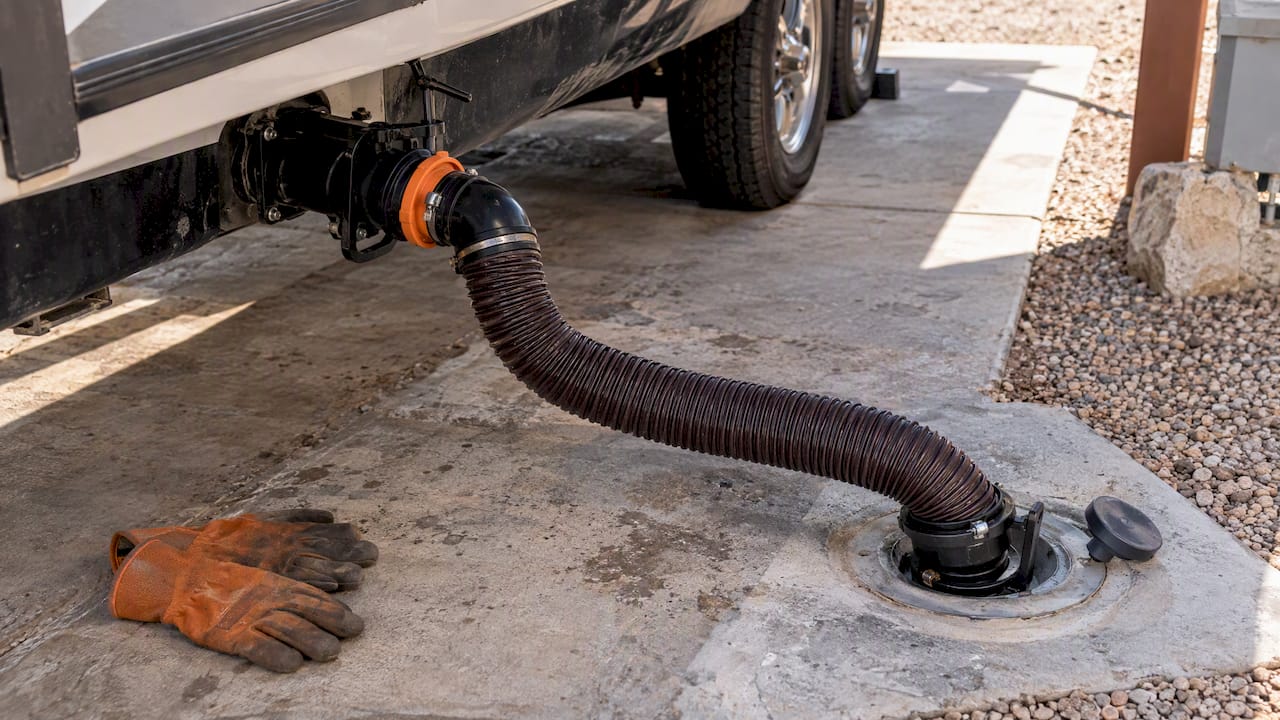
Never dump graywater on the ground. Use your site’s sewer connection or the park’s sanitary dump station, and follow the hose, gasket, and sealing steps your park posts. The rule exists for two reasons: standing wastewater draws pests and creates a public health risk, and it can put a park’s wastewater permit at stake. Parks, in turn, are expected to provide a working sewer riser or an approved dump station for every guest.
TL;DR:
- Graywater must always be disposed of through designated sewer connections or dump stations to prevent pest attraction and permit violations.
- Campground standards specify 4-inch diameter risers with caps, proper spacing from wells, and separate water and sewer lines to ensure compliance.
- Proper connection and disconnection of RV sewer hoses require inspection, airtight sealing, and following a five-step routine to avoid spills.
- Violations of graywater rules can lead to warnings, fines, eviction, and potential liability for contamination, with parks documenting all infractions.
- Full-hookup sites at parks like Mesquite Oasis provide individual sewer connections and clear policies listed online to promote safe disposal practices.
Table of Contents
- What are the core on-site rules guests must follow?
- What hookup and dump station standards should managers meet?
- How do you connect and disconnect an RV sewer hose safely?
- What happens when a guest breaks the graywater rules?
- Manager checklist: staying compliant day to day
- Why we hold the line on graywater rules
- Full hookups and published policies at Mesquite Oasis
- FAQ
- Sources
- Authoritative codes and guidance
What are the core on-site rules guests must follow?
Every full-hookup site comes with a sewer riser designed to handle wastewater. That connection, or the park’s dump station if you are not on a full hookup, is the only place wastewater should ever go. Dumping onto gravel, grass, or a storm drain is not a gray area: EPA guidance on RV wastewater treats ground discharge as a nuisance that regulated parks are expected to prevent.
Doing it right takes a short list of gear and a few habits:
- Use a flexible, non-collapsible sewer hose rated for RV waste, not a garden hose or a rigid pipe fitting.
- Fit a watertight rubber gasket or an approved threaded connector where the hose meets the riser.
- Keep gloves, a bucket, and basic cleaning supplies in your rig for any minor spill.
- Seal every joint before you open a tank valve, and recap the riser the moment you disconnect.
Spills and odors almost always trace back to a loose joint or a hose left connected with no cap on the open end. Check the connection by hand before you open a valve, and if the dump station has a flush pad, use it to clear the hose and the pad surface when you finish. The water spigot next to a dump station is there to rinse the pad and flush your hose, not to fill a drinking jug: it runs through a vacuum breaker precisely because it is not treated as potable.
What hookup and dump station standards should managers meet?
Campground sanitary codes from several states give a fairly consistent blueprint for what a compliant hookup and dump station look like, and managers who match it avoid most of the complaints and violations that come up later.
- Individual sewer risers are typically 4 inches in diameter, sit with the rim above grade, and take a tight-fitting cap when not in use.
- Dump stations need a sloped concrete apron, a drain of at least 4 inches, and a foot-operated cover over the drain opening.
- Flushing water at the station runs through a vacuum breaker and carries signage reading “Not for human consumption.”
- Risers and dump stations keep set distances from wells and other potable outlets, following the separation rules in the governing code.
- Water and sewer lines maintain horizontal separation from each other underground.
Indiana’s sanitary dumping station standards lay out this construction checklist in detail, including setbacks from wells and potable supply points. Illinois’ recreational area code adds specifics on sewer line diameter, horizontal separation, and backflow protection on flushing water, plus planning volumes for disposal versus holding-only systems. A park with sites that lack individual sewer connections needs to size its dump station or holding system based on the number of unsewered sites it serves, rather than just installing one station and hoping it keeps up.
Pro Tip: Keep a signed service agreement with a registered septage hauler on file year-round, not just renewed when an inspector asks for it.
How do you connect and disconnect an RV sewer hose safely?
A clean hookup takes five steps, done in order, every time:
- Prepare. Inspect your hose for cracks and check that the gasket seats tightly; put on gloves and keep a bucket handy for any drip.
- Connect. Seat the hose firmly in the riser, lock the gasket or threaded connector in place, and route the hose so it has no kinks or low points.
- Drain. Open the black tank valve first, let it run fully, then open the gray tank valve; use the dump station’s flush feature if one is provided.
- Disconnect and clean. Close both valves before touching the hose, flush the pad if you’re at a dump station, retract and rinse the hose, and put the riser cap back on.
- Follow signage. Never use a drinking-water tap to flush your hose or pad, and follow any park-specific instructions posted at the site or station.
Skipping the valve order, draining black before gray, is the single most common cause of a messy disconnect.
What happens when a guest breaks the graywater rules?
Consequences scale with how serious and how repeated the violation is. EPA guidance notes that ground discharge violations frequently lead to eviction or fines under municipal and state park ordinances, and most parks follow a similar escalation path.
- A first-time, minor spill often gets a warning and a request to fix the connection on the spot.
- Repeated or deliberate dumping typically brings a fine, a cleaning or repair charge, and can trigger immediate eviction from the park.
- Contamination of soil or groundwater can create liability beyond the immediate cleanup cost.
- Parks document violations and keep the registered septage hauler’s service record on file, and serious cases may warrant notifying the local health department or filing an insurance claim; for responsible waste removal practices, see Old Rainwater Tank? Let Sydney City Rubbish Deal With It.
Manager checklist: staying compliant day to day
A short, consistently applied checklist keeps a park’s permit intact and cuts down on guest confusion:
- Post clear signage at every dump station and water outlet, plus hookup instructions at individual sites.
- Require flexible, non-collapsible hoses and approved gaskets, and keep spare caps on hand for risers.
- Inspect risers, dump station pads, drains, and vacuum breakers on a routine schedule, not only after a complaint.
- Keep septage hauler service agreements and maintenance logs on site, and walk new staff through enforcement steps and guest onboarding.
Pro Tip: Laminate a one-page hookup diagram and leave it at the site office and the dump station: most spills happen because a guest skipped a step, not because they ignored the rules.
Why we hold the line on graywater rules
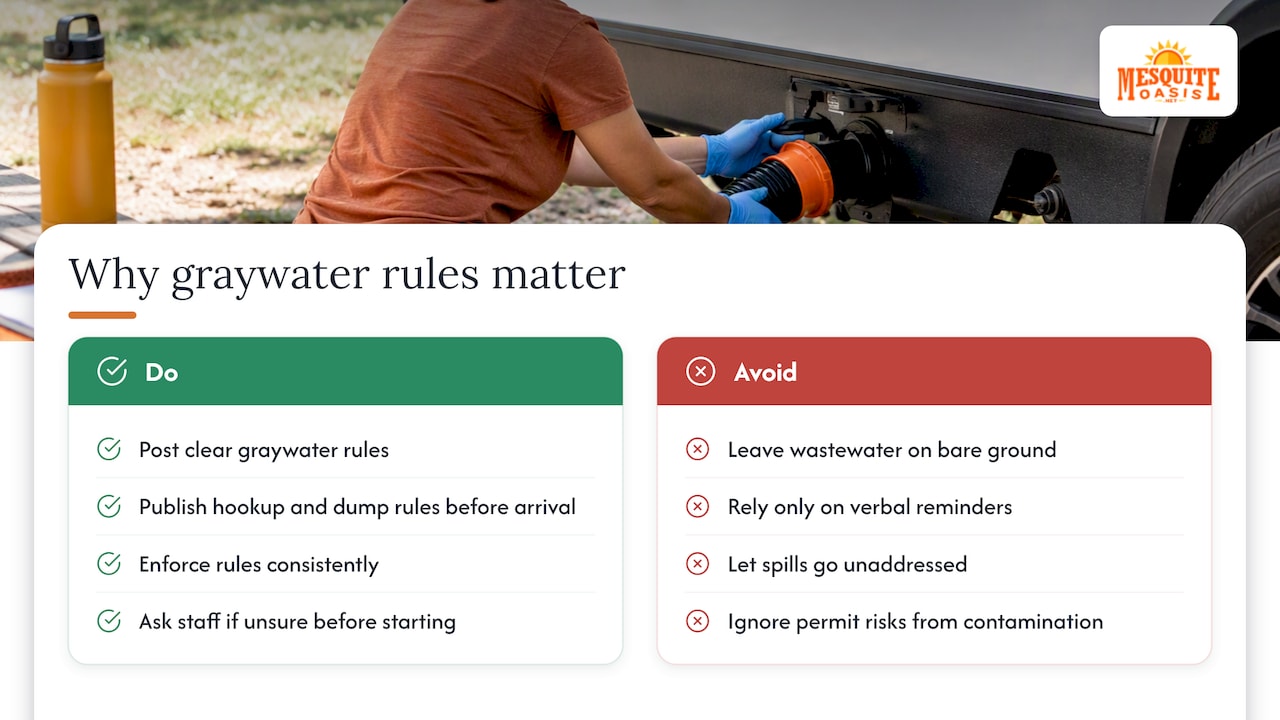
Graywater rules are not paperwork for its own sake. Standing wastewater on bare ground draws flies and pests within hours, and a contaminated patch can jeopardize the wastewater permit an entire park depends on. We would rather post the rule clearly and enforce it consistently than deal with a spill after the fact.
Clear, published policies help here more than any verbal reminder. When guests can read the hookup and dump station rules before they even arrive, most problems never happen. If you’re ever unsure about a connection or a dump station step, ask staff before you start. It takes less time than cleaning up a mistake.
Full hookups and published policies at Mesquite Oasis
We built Mesquite Oasis around full hookups done right: every site comes with 30 or 50 amp power and a proper sewer connection, so you’re never relying on a shared dump station for daily use. Our RV sites page lists the hookup specs for each site type, and our park policies spell out hookup expectations in plain language before you ever arrive.

Booking runs entirely online through our registration portal, with no phone call required.
- Choose a 30 or 50 amp full-hookup RV site or a furnished lodge room.
- Apply, pay, and manage your stay online, day or night.
- Reach laundry, a gym, and other amenities with your personal PIN code.
Check site availability on our RV sites page and apply today.
FAQ
What is the difference between graywater and blackwater at an RV park?
Graywater is wastewater from sinks and showers, while blackwater comes from the toilet. Most full-hookup RV sites route both into the same sewer connection, so the practical rule for guests is the same for either: never dump on the ground, always use the riser or dump station.
Can I legally dump RV graywater on the ground anywhere?
No. EPA guidance treats ground discharge of RV wastewater as a public health nuisance, and most state and municipal campground codes prohibit it outright. Always use your site’s sewer connection or an approved dump station instead.
What size is a standard RV sewer hookup riser?
Individual sewer risers at most parks run about 4 inches in diameter, sitting with the rim above ground level and fitted with a tight cap when not connected. Illinois’ recreational area code specifies this same minimum sewer line diameter for dump station and site connections.
Does Mesquite Oasis provide full sewer hookups at every RV site?
Yes, every RV site at Mesquite Oasis includes a full hookup with 30 or 50 amp power and an individual sewer connection. Site details and current availability are listed on our RV sites page.
What happens if I get caught dumping graywater illegally at a park?
Consequences range from a warning for a minor, first-time spill to fines, cleanup charges, and eviction for repeated or serious violations. Parks typically document the incident, call a registered septage hauler for cleanup, and may notify the local health department if contamination is a concern.
Sources
- EPA guidance on RV, boat and mobile home wastewater
- Indiana sanitary dumping stations: standards for construction
- Illinois Administrative Code: Recreational area and sanitary dump station requirements
- Ohio Administrative Code Rule 3701-25-05: Water, sewerage and gray water recycling systems


