
Odessa’s tap water is safe to drink, cook with, and bathe in right now, even though it may smell or taste off to many households. City testing in July 2026 confirmed the water meets state and federal standards, and officials trace the unusual taste and odor to minerals and algae stirred up during Colorado River Municipal Water District (CRMWD) line maintenance. Expect the issue to fade as crews flush the system.
TL;DR:
- Odessa’s elevated TDS level of 745 ppm indicates minerals and algae disturbed during maintenance, causing taste and odor issues, but does not threaten water safety.
- Flushing affected lines and thorough monitoring are expected to resolve the problem within a few days, with the system still meeting all primary drinking water standards.
- Vulnerable groups such as infants, immunocompromised individuals, and homes with older pipes should consider extra caution, especially if water appears discolored or smells strong.
- Using an NSF/ANSI 42-certified carbon filter and running cold water before use can improve taste and odor during the temporary disturbance.
- Residents can verify current water conditions by checking city alerts, water quality reports, and official testing data directly from Odessa’s utilities.
Table of Contents
- Odessa Tap Water Taste: What the City’s Testing Found
- Why Does Tap Water Suddenly Taste or Smell Different?
- Is Odessa Water Safe to Drink Right Now?
- What Should You Do About Odessa’s Tap Water Taste Right Now?
- Who Supplies Odessa’s Drinking Water?
- How Does Odessa’s Tap Water Compare to Other Texas Cities?
- Could the Taste or Smell Itself Affect Your Health?
- Will the City Keep Testing and Sharing Updates?
- A Local Perspective on Water You Can’t Trust by Smell Alone
- Need a Comfortable Place to Stay While the Water Clears?
- Where to Verify Odessa’s Water Quality Yourself
- Sources
- FAQ
Odessa Tap Water Taste: What the City’s Testing Found
The City of Odessa issued a public alert in July 2026 after residents across town started reporting a musty smell and a metallic or earthy taste from their faucets. Officials moved fast to say the water remains safe, pointing to lab results that showed no violation of drinking water rules.
One number stood out in that testing: a Total Dissolved Solids (TDS) reading of 745 ppm in a sampled location, well above what most people notice as “normal” tap water. That figure explains the taste complaints even though it doesn’t signal contamination.
The Utilities Department has responded with a few concrete steps:
- Flushing affected water lines to clear out dislodged sediment and mineral buildup
- Increased monitoring of TDS and related aesthetic markers across the distribution system
- Coordination with CRMWD on the maintenance work believed to have triggered the issue
- Public updates through the city’s alert system as conditions change
Residents with questions can call the Utilities Department directly at 432-335-4627 to ask about testing dates or current conditions in their part of town.
Why Does Tap Water Suddenly Taste or Smell Different?
Water sitting in underground pipes picks up sediment over time. Minerals settle, and in surface reservoirs, tiny amounts of algae can work their way into the system. Most days, none of that matters because the water moves steadily and nothing gets disturbed.
Maintenance changes that. When CRMWD crews drain a line, charge a new one, or shift pressure to reroute flow, it can knock loose material that has been sitting undisturbed for months. That material gets carried downstream to your faucet, and suddenly your water tastes metallic, earthy, or faintly like a swimming pool.
A TDS reading of 745 ppm is the clearest evidence of this. TDS measures everything dissolved in water, calcium, magnesium, sulfate, and similar minerals combined. The EPA’s guidance on nuisance chemicals sets a secondary standard of 500 mg/L for TDS specifically because higher concentrations start to affect taste, even when nothing dangerous is present.
Common culprits behind these sensory shifts include:
- Elevated TDS, which produces a salty or mineral-heavy taste
- Iron and manganese, which cause a metallic flavor or slight discoloration
- Sulfate, associated with a bitter or “rotten egg” smell in some cases
- Chlorine adjustments during routine treatment, which can intensify odor temporarily
The U.S. Geological Survey notes that these organoleptic issues, the technical term for taste, smell, and appearance problems, are almost always aesthetic. They tell you something changed in the pipes. They don’t, by themselves, mean bacteria or pathogens are present.
Is Odessa Water Safe to Drink Right Now?
Yes. The distinction that matters here is the difference between a primary standard and a secondary standard. Primary standards are legally enforceable health limits, things like bacteria counts or arsenic levels that trigger a boil-water notice if violated. Secondary standards, called SMCLs (Secondary Maximum Contaminant Levels), cover aesthetics: taste, odor, color, and staining potential.
TDS falls under the secondary category. A 745 ppm reading exceeds the EPA’s 500 mg/L guideline for pleasant taste, but it does not indicate a health violation under TCEQ testing requirements. That’s an important nuance: your water can taste noticeably different and still be entirely compliant with every enforceable safety rule.
That said, a few groups warrant extra caution during any taste or odor event:
- Infants on formula, since some municipal water carries trace minerals worth diluting with filtered or bottled water for very young children
- Immunocompromised individuals, who are often advised to use extra caution with any water source during unusual events, even when testing shows compliance
- Homes with older plumbing or lead service lines, where disturbed water flow can occasionally loosen scale inside household pipes rather than the city’s mains
Pro Tip: If your water looks cloudy or discolored rather than just smelling different, let it run for a full two minutes before judging it. Discoloration from disturbed sediment usually clears fast; a smell that lingers past a few days is worth a call to the city.
If you have specific health concerns, especially for a newborn or someone undergoing treatment that suppresses immunity, a quick call to your physician alongside the utility is reasonable. It costs nothing and settles the question.
What Should You Do About Odessa’s Tap Water Taste Right Now?
You don’t have to just wait it out. A few steps will noticeably improve what comes out of your tap within days.
- Flush your least-used faucets first. Run cold water for 30 seconds to 2 minutes at outdoor spigots, laundry taps, or a rarely used bathroom sink before touching your kitchen faucet. This clears standing water that’s had the most time to pick up sediment.
- Use an NSF/ANSI 42-certified filter. This certification specifically covers taste and odor reduction through carbon filtration, distinct from NSF/ANSI 53, which targets health-related contaminants like lead. A basic certified pitcher filter handles most of what’s causing the current complaints.
- Let water sit uncovered in the fridge. An open pitcher stored cold for a few hours lets chlorine smell dissipate naturally, no filter required.
- Call the Utilities Department if the smell persists past a few days. Ask specifically for recent sample dates and lab results for your area; the city can tell you whether your street has been flushed yet.
- Consider bottled water temporarily for vulnerable household members. If you have an infant, someone immunocompromised, or you’re simply not comfortable, bottled water is a reasonable bridge while the system clears.
Pro Tip: Keep a filled pitcher in rotation rather than relying on filtered water straight from the tap during flushing days. Cold storage plus a quick pass through a certified filter handles both the smell and the taste in one step.
Who Supplies Odessa’s Drinking Water?
The Colorado River Municipal Water District, known locally as CRMWD, sells untreated water wholesale to Odessa, which is why maintenance on CRMWD’s system directly affects what comes out of your tap. The city’s water quality report names three primary surface reservoirs:
- Lake Ivie
- Lake Thomas
- Lake Spence
Odessa also draws from supplemental groundwater wells in Ward and Martin counties when reservoir levels or demand require it. Surface water sources like these are more prone to seasonal algae growth than deep wells, which is exactly why line work that disturbs long-settled sediment or shifts flow between sources can produce a temporary taste or odor change that a well-only system rarely sees.
How Does Odessa’s Tap Water Compare to Other Texas Cities?
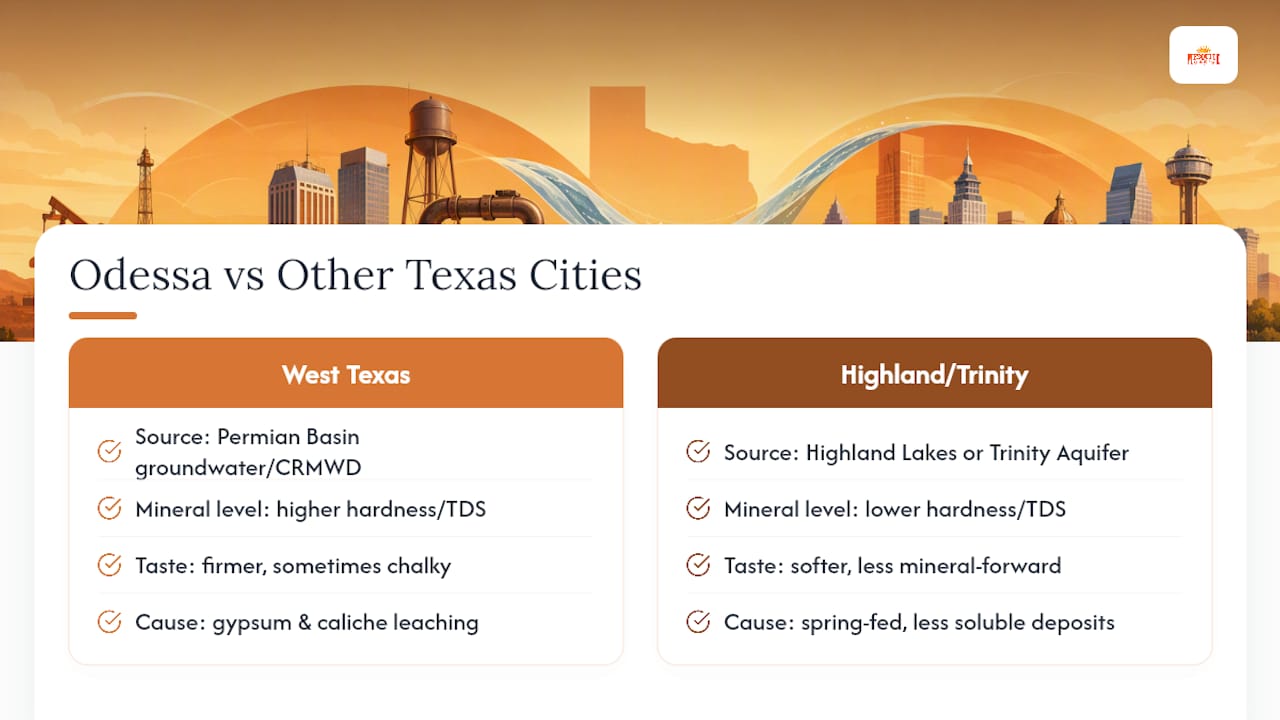
Odessa isn’t unique in dealing with mineral-heavy water. West Texas municipalities that rely on Permian Basin groundwater and CRMWD’s reservoir network generally report harder, more mineral-forward water than cities drawing from the Highland Lakes chain near Austin or the Trinity Aquifer feeding parts of the Dallas-Fort Worth area.
Hardness and dissolved solids run higher across most of West Texas simply because of regional geology, gypsum and caliche deposits leach calcium and sulfate into groundwater and reservoirs alike. That baseline mineral content means Odessa water typically registers a firmer, sometimes chalkier taste than water in East Texas cities even on an ordinary day, before any maintenance event.
A temporary spike like the July 2026 TDS reading pushes that baseline noticeably higher for a short window. It’s less a sign that Odessa’s water quality lags behind other cities and more a sign that West Texas water has always required more attention to filtration and taste management than water drawn from softer, spring-fed sources elsewhere in the state. Residents who’ve lived in both regions often notice the difference immediately after a move.
Could the Taste or Smell Itself Affect Your Health?
Taste and odor compounds tied to nuisance minerals and mild algae byproducts are not toxic at the levels typically involved in events like this one. Compounds like geosmin, the earthy-smelling substance many people associate with algae, are detectable by the human nose at extraordinarily low concentrations, often long before they reach any level of health concern.
That gap between “detectable” and “dangerous” is exactly what makes these events unsettling. Your senses are built to notice change, and a metallic or musty taste triggers an instinctive wariness even when lab data says otherwise. The USGS notes that a sudden TDS spike can sometimes correlate with trace elements like arsenic in certain aquifers, which is part of why utilities often expand testing scope when TDS jumps unexpectedly rather than assuming it’s purely aesthetic.
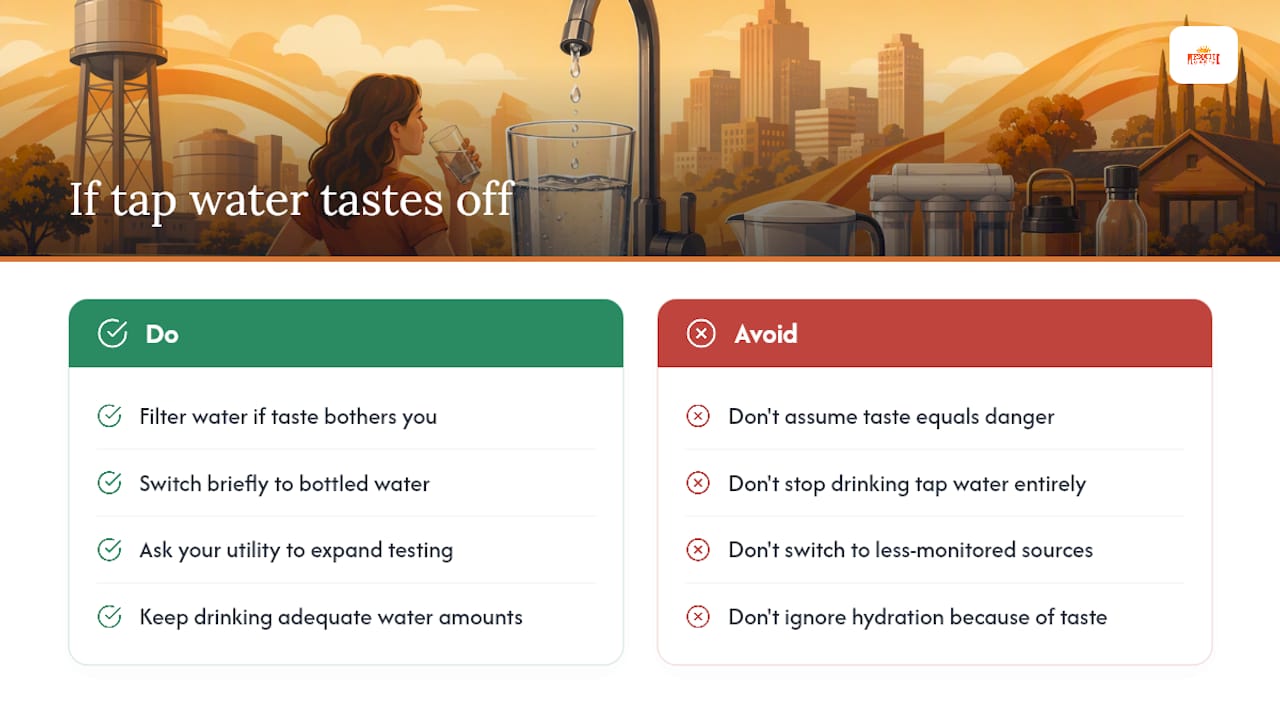
For most residents, the practical health implication is minimal: an unpleasant taste, maybe some mild stomach hesitancy about drinking straight tap water, but no documented illness risk at the levels reported in Odessa’s July 2026 event. The bigger risk is behavioral. People who stop drinking tap water altogether sometimes switch to less-monitored alternatives or simply drink less water overall, which carries its own downsides. If the taste bothers you, filtering or briefly switching to bottled water solves the sensory problem without requiring you to distrust the underlying safety data.
Will the City Keep Testing and Sharing Updates?
The Utilities Department has committed to continued monitoring of TDS and related aesthetic markers while the affected lines are flushed, and the city’s alert system remains the fastest way to track progress. Odessa also publishes an annual water quality report through CRMWD data, giving residents a baseline to compare future readings against.
Transparency here matters because taste and odor events tend to resurface, whether from seasonal algae blooms in the reservoirs or future maintenance cycles. A city that publishes sample dates and specific readings, rather than a vague “water is fine” statement, gives residents something to actually check. If you want to verify whether your specific block has been flushed, calling the Utilities Department and asking for the sample date nearest your address is more useful than guessing based on how your water smells today.
Expect updates to continue rolling out through the alert center as testing confirms the system has fully cleared, likely within days of the original notice rather than weeks.
A Local Perspective on Water You Can’t Trust by Smell Alone
Water that suddenly smells wrong triggers something almost primal. You don’t need a chemistry background to feel uneasy filling a glass from a tap that smelled fine last week. That instinct isn’t irrational. It’s just poorly calibrated to what actually indicates danger versus what indicates a temporary mineral shift.
The city’s alert system is the fastest way to track whether your neighborhood’s lines have been flushed, and it’s worth signing up for those notifications directly rather than relying on secondhand chatter. Some households, especially those hosting out-of-town workers or managing a newborn’s formula water, decide the simplest fix is stepping away from the tap entirely for a few days rather than filtering everything by hand. That’s a reasonable call, and local short-term lodging options exist for exactly that kind of situation.
Need a Comfortable Place to Stay While the Water Clears?
If you’d rather skip the flushing and filtering routine altogether for a few days, Mesquite Oasis Lodge & RV Park gives Permian Basin workers and residents a fully equipped alternative with utilities already handled. It’s the option for anyone who wants a comfortable, no-hassle place to land immediately rather than waiting out a taste and odor event at home.

The property runs 241 full-hookup RV sites and 110 furnished lodge rooms, all bookable entirely online, application, approval, and payment, without a single phone call. A 30 Amp RV site starts at $300 a week or $795 a month, and a furnished Single Room runs $400 weekly or $1,350 monthly, utilities and WiFi included either way. Every guest gets a personal PIN code for laundry, the gym, and common areas, so there’s no waiting on staff for access. If a short break from your own tap sounds appealing, check current availability and book directly through Mesquite Oasis.
Where to Verify Odessa’s Water Quality Yourself
Don’t take secondhand summaries at face value when you can check the primary sources directly:
- The City of Odessa’s alert page for the latest testing updates
- The 2024 Water Quality Report for source and compliance details
- The EPA’s SMCL guidance for what secondary standards actually cover
- The USGS explainer on taste and odor science
Bookmark these and check sample dates against today’s date to confirm you’re reading current information.
This article is general information, not a substitute for advice from a qualified doctor. Consult a qualified healthcare professional about your own circumstances before acting on anything here.
Sources
- Alert Center • City of Odessa Addresses Temporary Changes in Water Taste and Odor
- Secondary Drinking Water Standards: Guidance for Nuisance Chemicals | US EPA
- Drinking Water Taste and Odor | U.S. Geological Survey
- 2024 Water Quality Report — City of Odessa
FAQ
Can You Drink Tap Water in Odessa, TX, Right Now?
Yes. City testing in July 2026 confirmed the water meets state and federal drinking water standards, even with the reported taste and odor changes. The unusual sensory qualities are classified as aesthetic, not a health violation.
Why Does My Tap Water Suddenly Taste Weird?
Sudden taste changes usually happen when maintenance work, like draining or charging a new waterline, dislodges minerals or algae that had settled undisturbed in the pipes. A TDS reading of 745 ppm recorded during Odessa’s July 2026 event illustrates exactly this kind of shift.
Which City in Texas Has the Cleanest Tasting Tap Water?
Water quality perception varies by region because of local geology rather than any single city doing something wrong. Areas drawing from softer, spring-fed sources tend to report milder-tasting water than West Texas cities like Odessa, which pull from mineral-heavy reservoirs and groundwater common to the Permian Basin.
Where Does Odessa, Texas Get Its Drinking Water?
Odessa purchases untreated water wholesale from the Colorado River Municipal Water District (CRMWD), which draws primarily from Lake Ivie, Lake Thomas, and Lake Spence. Supplemental groundwater wells in Ward and Martin counties support supply when needed.
How Long Will the Odessa Water Taste and Odor Issue Last?
The city expects the taste and odor to dissipate within days as crews flush the affected lines and monitoring continues. If the smell or taste persists longer than that at your address, call the Utilities Department at 432-335-4627 for a status update on your specific area.
Is There a Temporary Place to Stay in Odessa While the Water Issue Clears?
Mesquite Oasis Lodge & RV Park offers furnished lodge rooms and full-hookup RV sites with utilities included, bookable entirely online. It’s a practical short-term option for residents or workers who’d rather stay somewhere else for a few days than manage filtering and flushing at home.


