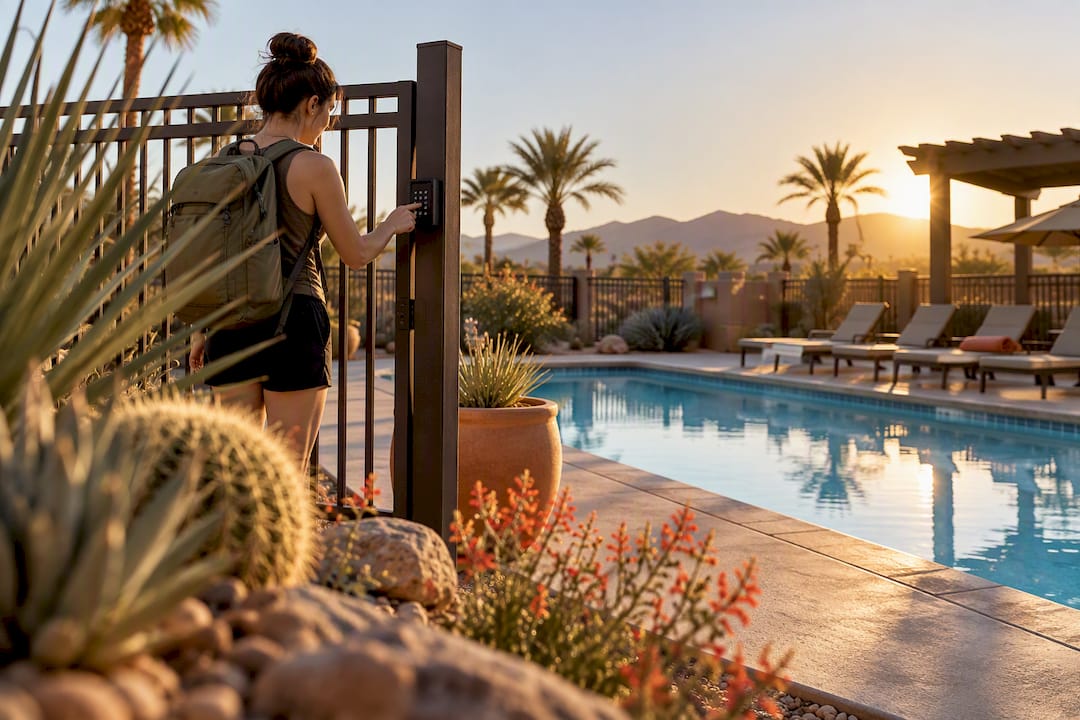
Most RV parks reserve pool access for registered, currently checked-in guests, and treat it as an included amenity rather than a paid extra. The main exception is resort-style properties, which sometimes sell day passes or guest wristbands to non-guests when capacity allows. Hours shrink in winter, lifeguards are rare, and supervision rules for kids are close to universal, so verify the details before you count on a swim.
TL;DR:
- Most RV parks include pool access in the site fee, but resort-style properties often sell day passes to non-guests when capacity allows.
- Pool features vary from basic seasonal, unheated pools to resort amenities like heated pools, lazy rivers, splash pads, and hot tubs, often with separate hours.
- Pool access is typically limited to checked-in guests or managed via wristbands and PIN codes, with fees structured as included, per-person passes, or seasonal memberships.
- Nearly all RV park pools operate without lifeguards, leaving supervision responsibility to parents and guests, with strict rules on diving, glass, and flotation devices.
- Confirm pool availability, hours, supervision rules, and additional fees in advance by contacting the park directly or reviewing their official policies before booking.
Table of Contents
- What to Expect From RV Park Pools and Water Features
- Pool Access Policies: Who Can Swim, Hours, and Fees
- Pool Safety, Etiquette, and Rules to Expect
- How to Confirm Pool Access Before You Book
- Mesquite Oasis: How Amenity Access Works for Long-Stay Guests
- Where to Verify Pool Rules and Hours
- Book a Site With Pool Access Included
- Sources
- FAQ
What to Expect From RV Park Pools and Water Features
Not every “pool” at an RV park means the same thing. A basic campground pool might be a single unheated rectangle open Memorial Day to Labor Day. A resort-style property can mean a heated pool, a lazy river, a splash pad, and a hot tub, all bundled into one amenity package for guests staying on-site.
The scale of the property usually predicts the access policy, as detailed in Weekend WaveRunner Rentals: Benefits for Families and Adventurers, which offers relevant background for planning water-focused RV trips. Smaller, budget-oriented parks tend to keep the pool guest-only with no exceptions, since there’s no staff to manage outside traffic. Larger resorts with multiple water features are more likely to sell day passes, because they’ve already built the infrastructure and staffing to handle non-guest volume. Fireside RV Resort in Louisiana, for example, lists a lazy river, a family pool, and an adults-only pool, all managed under resort-style access controls rather than an open-door policy.
Seasonality matters just as much as scale. A handful of properties heat their pools for year-round swimming, but most switch to a seasonal schedule that closes water features once temperatures drop. Here’s what typically separates one pool setup from another:
- Basic pool: Seasonal, unheated, open to registered guests, minimal staffing.
- Heated pool: Extends the swim season into shoulder months or, less commonly, runs year-round.
- Lazy river: Usually resort-tier, with posted operating hours separate from the main pool.
- Splash pad: Aimed at younger kids, often open longer hours since depth and drowning risk are lower.
- Hot tub: Frequently adults-only, with its own posted hours and capacity limit.
Properties like Coachella Lakes RV Resort bundle pools and a splash pad with full-hookup sites as a standard part of overnight and extended stays, which is the direction most mid-size to large parks are heading. If pool access matters to your trip, ask which category a park falls into before you assume “pool” means what you think it means.
Pool Access Policies: Who Can Swim, Hours, and Fees
Three models cover almost every RV park pool policy you’ll run into, and knowing which one a property uses tells you most of what you need before you even call:
- Registered-guest-only: The pool is included with your site or room fee, and access is limited strictly to guests currently checked in. No outside visitors, no day passes.
- Day-pass or guest-wristband model: Registered guests swim free, and the park also sells passes to the public or to visiting family, usually capped by daily capacity.
- Membership or seasonal-pass model: More common at parks with historic or high-demand pools, where regular guests buy a season pass on top of their site fee.
Hours follow a similar split. Smaller parks often run one block of hours for the whole pool area, while resort-scale properties post separate hours for the pool, the slides, and food or drink service around the water. Splash RV Resort is a clear example: pools, slides, and dining each carry their own schedule, so what’s open at 2 p.m. might not be open at 6 p.m. Staffing and safety drive that split, not arbitrary scheduling.
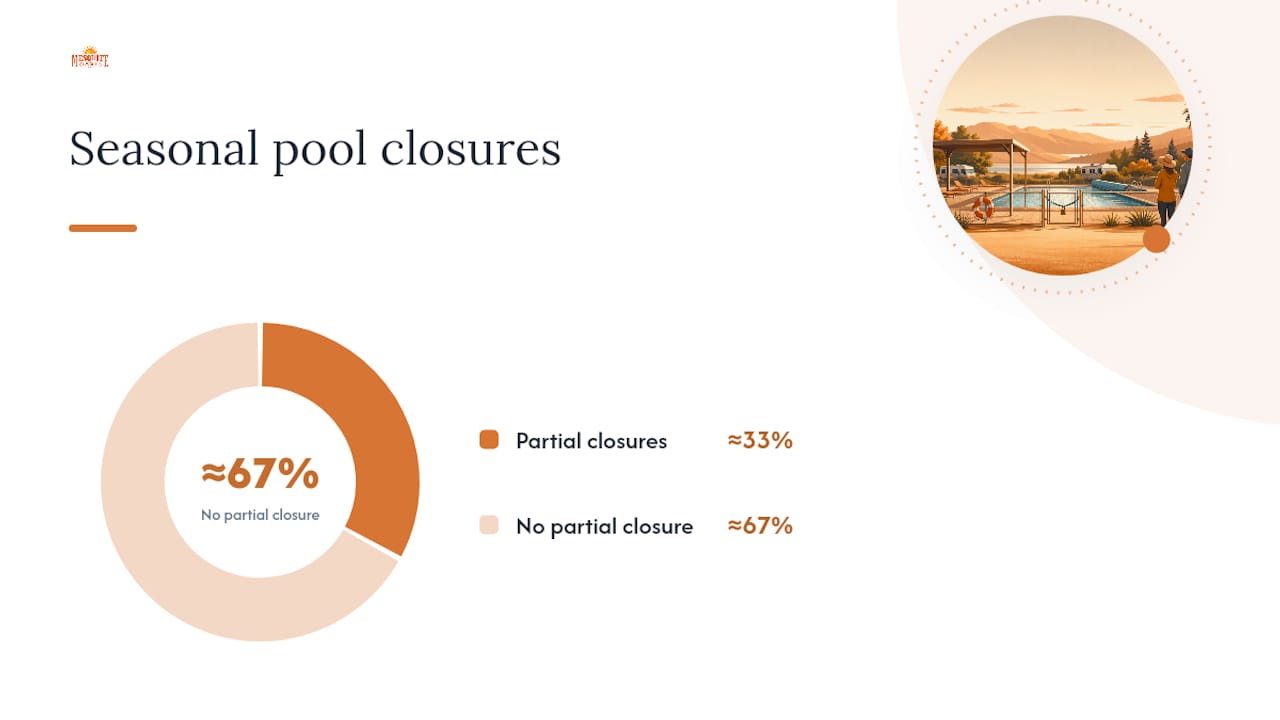
Roughly one in three larger campground water features closes partially for short maintenance windows during the season, then reopens in stages rather than all at once.
Enforcement usually comes down to wristbands, PIN codes, or a simple check-in log at the pool gate. Kamp Dels in Minnesota includes waterpark access free for registered guests and offers day passes, but also closes sections of the waterpark for maintenance and brings them back online in phases, so “open” doesn’t always mean every feature is running. Fees, where they exist, usually take one of three forms: bundled into your nightly or monthly rate, charged per person as a day pass, or billed as a seasonal membership add-on. Ask which applies before you build a trip around it.
Pool Safety, Etiquette, and Rules to Expect
Almost no RV park pool has a lifeguard on duty. The standard posted policy is “swim at your own risk,” which puts responsibility for supervision squarely on parents and guests, not park staff. Oakdale Park’s plunge pool spells this out directly, requiring that children under 14 be accompanied by an adult at all times, a threshold that shows up at a lot of similarly sized parks.
Beyond supervision, expect a fairly consistent rule set across properties:
- No diving, and no glass containers anywhere near the pool deck.
- Flotation devices allowed for young kids, but often restricted in deep-water sections.
- Posted conduct rules, with pool privileges subject to suspension for repeat violations.
- Guest limits per site, especially during peak weekends or reserved events.
- Quiet hours that apply to pool areas the same way they apply to the rest of the property.
Long-stay residents run into a slightly different friction point: reserving the pool area for a private gathering. Parks that allow event bookings usually require advance notice and cap headcount, since a birthday party for 20 people changes the pool’s supervision math for everyone else swimming that day.
Pro Tip: Call or message the park directly and ask, “What happens if my child’s flotation ring is the wrong size for the deep end?” The answer tells you more about how seriously a park enforces supervision than any glossy amenities page will.
How to Confirm Pool Access Before You Book
A five-minute check before you reserve saves you a bad surprise on arrival day. Work through this in order:
- Ask directly whether the pool is guest-only or sells day passes, and if passes exist, whether they’re capped by daily headcount.
- Confirm hours and seasonality, including whether the pool is heated or shuts down entirely in colder months.
- Ask about supervision rules and lifeguard status so you know exactly what “swim at your own risk” means for your kids.
- Check capacity limits and any extra fees tied to guest passes, memberships, or event reservations.
- Read the property’s amenities and policy pages before booking. On Mesquite Oasis’s site, for instance, the amenities page lists the pool alongside other on-site features, and the policies page covers guest rules directly.
- If access is mission-critical, for an event or because you’re traveling with kids, get confirmation in writing through the booking system rather than relying on a verbal answer.
Mesquite Oasis: How Amenity Access Works for Long-Stay Guests
Mesquite Oasis Lodge & RV Park lists pool access as part of its on-site amenities, and access to the pool, gym, and other shared spaces runs through a personal PIN code rather than a front-desk check-in. That matters for workers on long assignments who come and go on irregular shift schedules; there’s no office hours to work around.
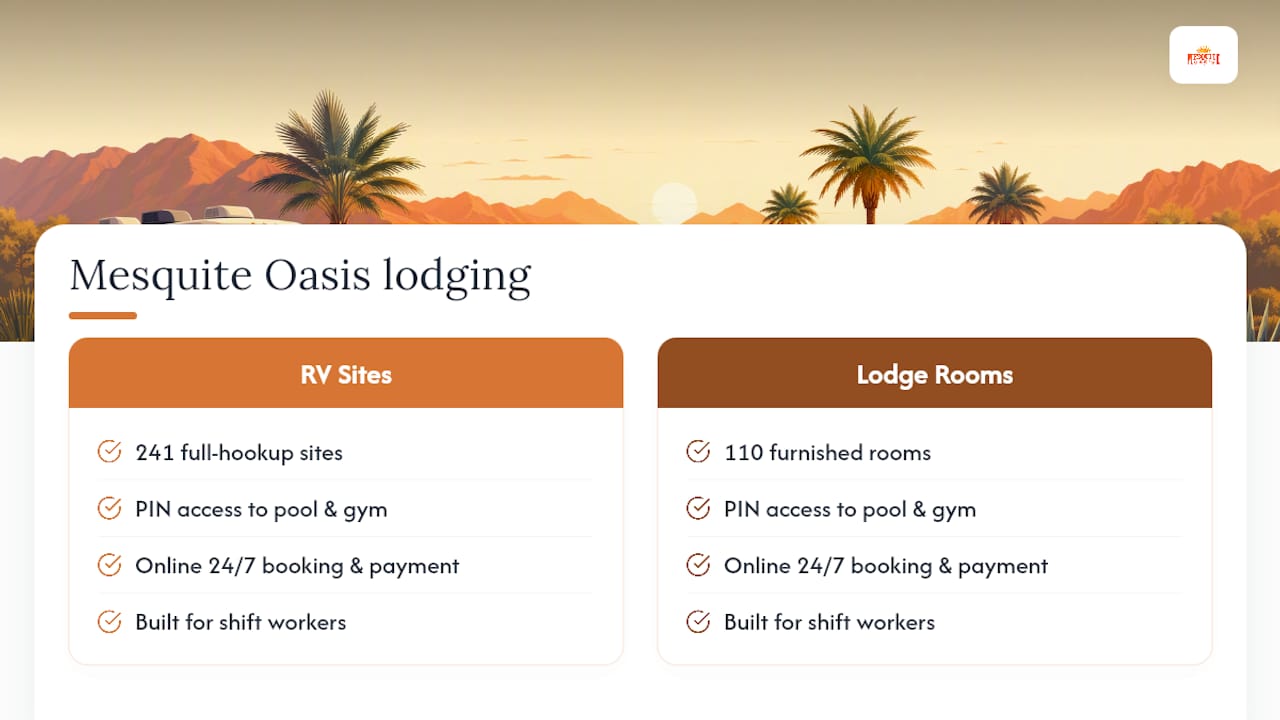
Booking, applying, and paying happen entirely online, available around the clock, so a crew arriving after a night shift can confirm their amenity access without waiting on a phone call. The property runs 241 full-hookup RV sites and 110 furnished lodge rooms, giving workers a choice between towing their own rig or renting a furnished room, both with the same amenity access. As a family-owned operation built specifically for Permian Basin shift workers and contractors, Mesquite Oasis treats amenities like the pool as part of a stable, secure living setup, not an afterthought.
Where to Verify Pool Rules and Hours
Before booking anywhere, check the property’s own amenities and policy pages, not a third-party listing. Mesquite Oasis’s amenities page confirms what’s included on-site, and the policies page covers guest conduct and access rules directly from the source.
Book a Site With Pool Access Included
Mesquiteoasis skips the guesswork entirely: pool access, along with the gym, laundry, and courts, is included with every stay and unlocked through your own PIN code, no front-desk hours to plan around and no separate day-pass fee to track down.

That matters most for shift workers and crews whose hours don’t match a typical office schedule. You apply, get approved, and pay entirely online, any time of day, so your amenity access is confirmed before you ever pull onto the property. Choose from 241 full-hookup RV sites starting at $300 per week or $795 per month, or a furnished lodge room starting at $400 per week if you’d rather skip towing a rig altogether. Companies housing multiple crew members can also inquire about block bookings and invoicing options. Check current availability and apply online now to lock in your site or room, pool access included from day one.
Sources
- Minnesota Campground Waterpark
- RV Resort Pool, Lazy River & Amenities in Louisiana
- Resort Amenities: Lazy River, Pools, Mini Golf & More
- Plunge Pool – Oakdale Park
FAQ
Is Pool Access Included With an RV Park Stay, or Is It Extra?
At most parks, pool access is bundled into your site or room rate rather than billed as a separate charge. Some resort-style properties add day passes for non-guests, but if you’re already registered and checked in, swimming is typically part of what you’re paying for. At Mesquite Oasis, pool access is included with every RV site and lodge room and controlled through your personal PIN code.
What Is the 3-3-3 Rule for RV Living?
The 3-3-3 rule is an informal travel guideline, not a pool or park policy: drive no more than 300 miles a day, stop by 3 p.m., and stay at least three nights before moving on. It has nothing to do with pool hours or amenity access, but travelers who follow it tend to arrive early enough to actually use a park’s pool before it closes for the evening.
What Is the 10-Year Rule at RV Parks?
Some parks and manufactured-home communities restrict RVs from certain sites, citing appearance and safety standards, though this varies widely by property and isn’t tied to pool access specifically. It’s worth asking directly whether a park applies an age limit to rigs, since it affects which sites you can book, not which amenities you can use once you’re there.
Can I Live in My RV Year-Round and Still Have Pool Access?
Long-term and monthly stays typically include the same amenity access as nightly guests, though pool hours often shrink or the pool closes entirely once winter weather sets in unless it’s heated. Extended-stay properties built for workers, rather than vacationers, tend to keep amenities like laundry and gyms open year-round even when the pool itself goes seasonal.
Do RV Parks With Pools Require Lifeguards?
Almost none do. The standard policy at RV park pools is “swim at your own risk,” with posted rules requiring an accompanying adult for children, often under age 14, rather than lifeguard supervision. Always confirm a park’s specific supervision requirements before letting kids swim unsupervised.


