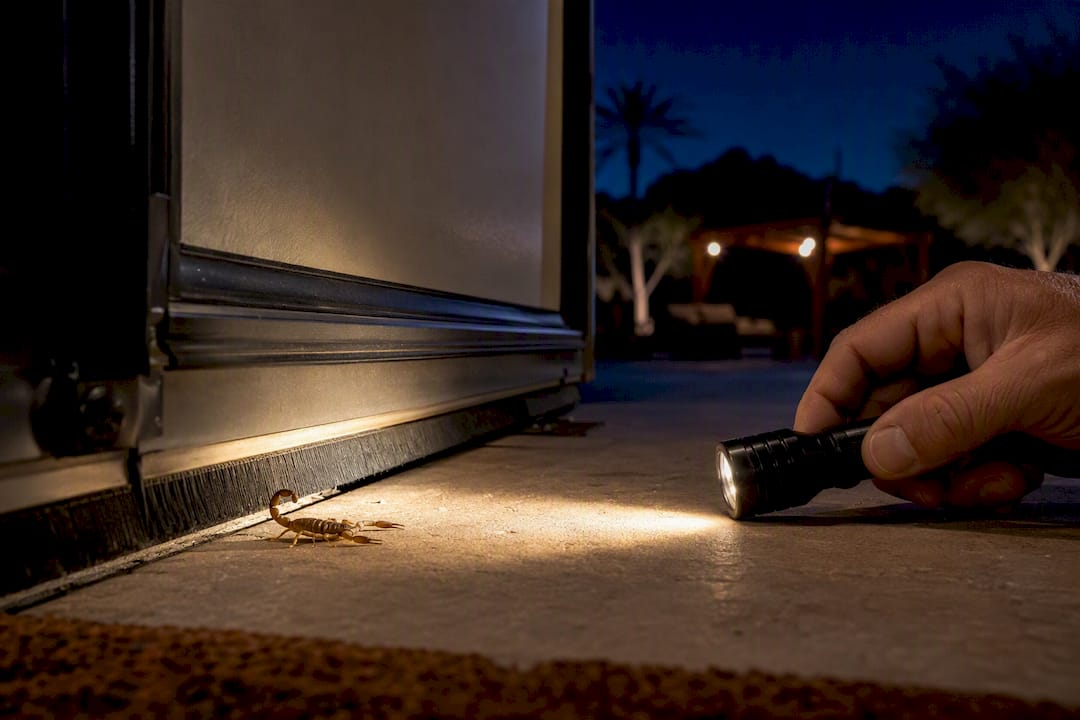
Yes, scorpions do get into parked RVs, especially in desert and arid regions during warm months, but indoor invasions are more of an occasional nuisance than a near‑certainty. If you find one, don’t touch it, and shake out your shoes and bedding before you climb in tonight. Beyond that, prevention comes down to two habits: sealing the gaps a scorpion can use, and keeping your rig clean enough that nothing wants to hide in it.
TL;DR:
- Sealing all entry points around water, vents, and storage bays significantly reduces scorpion access into RVs, especially in warmer months.
- Using food-grade diatomaceous earth around the perimeter and inspecting shoes and bedding nightly can help detect and deter scorpions effectively.
- Most stings cause mild pain and swelling, but children and allergy sufferers should seek emergency care if serious symptoms like difficulty breathing occur.
- Regular maintenance, site selection away from brush or rock piles, and routine cleaning lower long-term infestation risks in RV parks and camping grounds.
- Fogging inside an RV is dangerous and ineffective; professional pest control treatments are the safest and most reliable chemical option if non-chemical methods fail.
Table of Contents
- Quick Checklist to Cut Scorpion Risk Tonight
- How Scorpions Find Their Way Into a Rig
- Scorpion Stings: Symptoms and What to Do First
- The Full Sealing and Housekeeping Protocol
- Repellents and Treatments: What Actually Works, and What’s Risky
- What to Do If You Find One Inside
- How Managed RV Grounds Cut Down the Risk
- What Twenty Years of Living Outdoors Teaches You About Scorpions
- A Managed Site Takes the Guesswork Out of Long-Term Parking
- Sources
- FAQ
Quick Checklist to Cut Scorpion Risk Tonight
You don’t need a pest control contract to lower your odds tonight. A few five‑minute habits handle most of the risk:
- Shake out shoes, boots, and any clothing or towels left on the floor before putting them on.
- Wear closed shoes if you’re walking around outside after dark, even for a quick trip to the truck.
- Swap bright white exterior bulbs for yellow or amber “bug” lights, or switch to motion‑activated fixtures. White light draws in the insects scorpions hunt, which pulls the scorpions closer to your door.
- Check under the awning, on the steps, and inside storage bays before reaching in blindly.
- Dust food‑grade diatomaceous earth in a thin ring around the RV’s perimeter where your site allows it.
- Drop a few sticky glue traps in storage bays and under the rig. They won’t stop an infestation, but they tell you fast whether you have one.
Pro Tip: Glue traps are a detection tool, not a defense. Finding zero scorpions on a trap after a week is more useful information than any repellent spray, because it tells you the sealing work is actually holding.
How Scorpions Find Their Way Into a Rig
Scorpions are nocturnal hunters. They come out after dark chasing crickets, roaches, and other small insects, and they retreat to tight, dark spaces during the day to avoid heat and predators. An RV, unfortunately, offers plenty of both: bugs drawn to your lights, and cracks that mimic the rock crevices scorpions use in the wild.
RVs also have more seams than a typical house. Every hookup line, roof vent, slide-out seal, and undercarriage panel is a potential doorway, and manufacturers rarely treat pest sealing as a priority during the build. Common entry points include:
- Gaps around water, sewer, and electrical hookup connections
- Furnace, water heater, and plumbing vents with torn or missing screens
- Slide-out seals that have shrunk or cracked with age
- Undercarriage access panels and storage bay doors that don’t seal flush
- Open entry doors left propped during setup or breakdown
Scorpions can also climb tires and use wheel wells or step wells as a route up into the chassis, which is why checking tires before travel matters as much as checking the door. Once inside, they favor shoes, folded bedding, storage bays, and vent openings, the same dark, undisturbed spots they’d choose outdoors.
Scorpion Stings: Symptoms and What to Do First
Most scorpion stings in the United States cause pain, swelling, and numbness at the site, similar to a bad bee sting, and resolve within a day or two without medical treatment. Severity depends heavily on the species and the person stung. According to regional wildlife identification resources, sting reactions can range from mild, localized discomfort to more intense symptoms depending on which scorpion is involved and how sensitive the individual is.
Children, older adults, and anyone with a known allergy face a higher risk of a serious reaction and should be watched more closely after any sting.
If you or someone in your rig gets stung, here’s the sequence to follow:
- If the stinger is visible, remove it carefully without squeezing the venom sac further into the skin.
- Wash the area with soap and water.
- Apply a cold compress to reduce swelling and slow venom spread.
- Keep the affected limb still and roughly level with the heart.
- Watch for difficulty breathing, chest tightness, slurred speech, or muscle spasms. Any of those signs means it’s time to get emergency medical evaluation, not wait it out.
The Full Sealing and Housekeeping Protocol
Prevention is mostly exclusion plus routine cleaning, applied consistently rather than once. Work through it in this order:
Exterior sealing. Caulk every gap around your hookup connections with silicone sealant. Install or replace door sweeps so there’s no visible daylight under the entry door. Swap out cracked or flattened weatherstripping around windows and the entry door, and check slide-out seams for gaps where the rubber has pulled away from the frame.
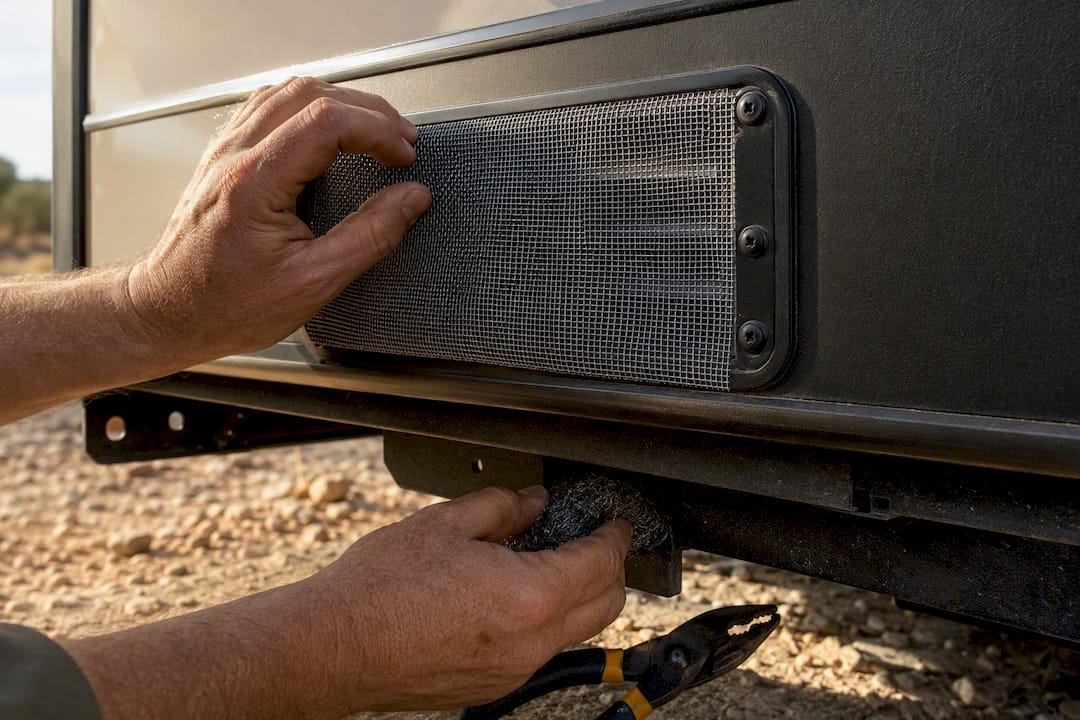
Vents and undercarriage. Cover furnace, water heater, and plumbing vents with fine mesh rated for heat exposure, since regular window screen material can warp near an exhaust vent. Pack larger undercarriage holes with stainless steel or brass wool, which scorpions and rodents can’t chew through the way they can foam or plastic. Open your storage bays every few days and actually look inside instead of reaching in.
Campsite and site selection. Keep firewood stacks, loose rock piles, and tall grass away from your rig; these are scorpion real estate. Where you have a choice, paved or gravel sites with trimmed vegetation carry lower risk than sites backed up against brush or rock outcroppings.
Routine maintenance. Make shoe and bedding checks a nightly habit, not an occasional one. Vacuum corners and baseboards weekly, since crumbs and insect debris are what draws the prey scorpions follow inside in the first place. Reapply diatomaceous earth after heavy rain, since water washes the barrier away.
Pro Tip: Solving the insect problem solves most of the scorpion problem. Scorpions don’t come inside looking for you. They come in following crickets and roaches, so cutting off the food source does more long-term good than any single repellent.
If you’ve sealed everything you can reach and you’re still finding scorpions weekly, that’s the point to call a licensed pest control professional rather than escalating the DIY approach further.
Repellents and Treatments: What Actually Works, and What’s Risky
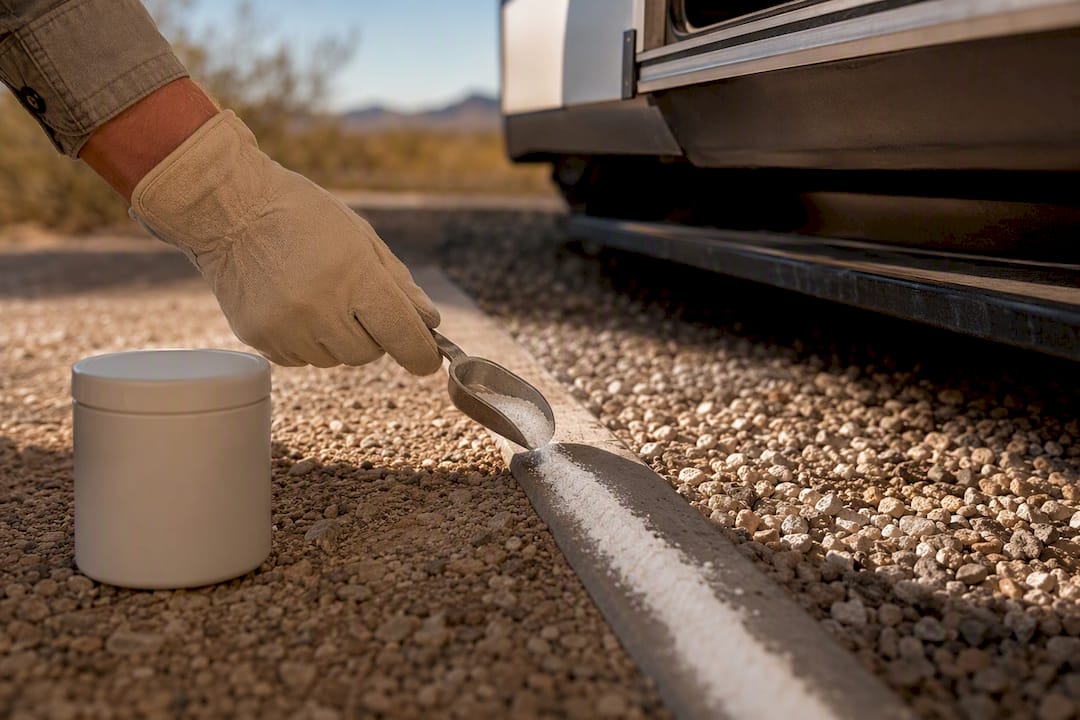
Food-grade diatomaceous earth is the most widely recommended non-chemical option. It’s a fine powder made from fossilized algae that dehydrates insects and scorpions on contact by damaging their exoskeleton. Buy the food-grade version specifically, avoid breathing the dust when applying it, and expect to reapply it after rain or heavy wind.
Essential oils like peppermint or cedar get recommended constantly in camping forums, but the evidence behind them is thin. If you use them, dilute carefully and keep them away from pets, since concentrated oils can irritate skin and airways in small animals.
Commercial perimeter treatments exist, and a professional applicator can offer more targeted coverage than a spray bottle from a hardware store. That’s usually the right call in areas with a known, persistent scorpion population rather than a one-off sighting.
One thing to avoid entirely: total-release foggers inside an RV. The National Park Service warns that fogging in a small, enclosed space creates real fire and ignition risk, particularly with propane systems running through the same confined volume. If a chemical treatment is genuinely needed, coordinate with a pest professional who understands RV systems rather than fogging it yourself. Whatever product you do use inside, read the label for ventilation requirements and re-entry intervals, and never assume a house product’s instructions translate cleanly to a much smaller space.
What to Do If You Find One Inside
Finding a scorpion in your rig is unsettling but manageable if you don’t panic and grab it bare-handed.
- Trap it under a jar or cup, slide a stiff card underneath, and carry it outside. Long tongs or a broom and dustpan work too.
- Once it’s out, do a quick sweep of storage bays, shoes, and bedding, and check your glue traps for signs you’ve got more than one.
- If you were stung, follow the first-aid steps above and, if it’s safe to do so, snap a photo of the scorpion for identification before releasing or disposing of it.
- If sightings keep happening, tell the campground host or reach out to a local pest control service. Repeated indoor sightings usually mean an entry point is still open somewhere.
How Managed RV Grounds Cut Down the Risk
A well-maintained park does a lot of the prevention work before you ever arrive. Paved sites, mowed common areas, and cleared brush remove the shelter and prey insects that draw scorpions in the first place. Some managed RV parks maintain full-hookup sites and furnished lodge rooms with that kind of upkeep built into daily operations.
When you pull into any site, managed or not, run a quick arrival check: look over your hookup connections before plugging in, glance inside storage bays before unloading, and clear any debris that’s collected near your wheels during transit. Because some RV parks handle applications, payments, and amenity access through an online account and PIN code, you can also flag any pest concerns to management without needing to track someone down in person.
What Twenty Years of Living Outdoors Teaches You About Scorpions
Most of the fear around scorpions in RVs is disproportionate to the actual risk. In the areas where they’re common, you’re far more likely to find one dead in a glue trap than to get stung in your sleep, provided you’ve done the basic sealing work.
The mistakes I see repeated most are always the same two: people seal the obvious gaps around doors and windows, then skip the vents and undercarriage entirely because those spots are harder to reach and easier to forget. That’s exactly where scorpions get in. Pair exclusion with detection. A sealed rig with a glue trap in the storage bay tells you something a sealed rig alone never can: whether the sealing actually worked.
A Managed Site Takes the Guesswork Out of Long-Term Parking
If you’re staying in the Permian Basin for weeks or months rather than a weekend, the sealing and housekeeping routine above gets a lot easier on a well-kept lot than on a patch of undeveloped ground surrounded by brush and rock. A well-maintained RV park can have numerous full-hookup RV sites and furnished lodge rooms, with grounds upkeep that keeps the tall grass, debris, and rock piles that attract scorpions away from your rig.

Every part of booking happens online, from the application to payment, so you can lock in a long-term RV site without a single phone call, day or night. Guests may use a personal PIN code to access laundry, gym, and other amenities without extra check-ins. If you’re weighing a long assignment in the area, check current rates and availability and get your site reserved before your start date.
This article is general information, not a substitute for advice from a qualified doctor. Consult a qualified healthcare professional about your own circumstances before acting on anything here.
Sources
- How to keep scorpions out of your RV
- Motorhome pest and rodent control
- NPS: RV fire safety guidance
- What You Should Know About RV Pest Prevention – RV PRO
- San Francisco Bay wildlife: scorpions
FAQ
How do you repel scorpions when camping?
Seal obvious gaps in your setup, swap white lights for yellow or motion-activated ones, and ring your site or rig with food-grade diatomaceous earth, reapplying after rain.
What do scorpions hate the most?
Scorpions avoid dry, dusty barriers like diatomaceous earth and bright light, and they steer clear of areas without insect prey or dark hiding spots to shelter in during the day.
What month are scorpions most active?
Scorpion activity typically runs from spring through fall, peaking during warm summer months when they hunt most actively at night.
What kills scorpions immediately?
Direct contact insecticides labeled for scorpions and physical methods like a heavy shoe work fastest, but total-release foggers should be avoided inside an RV due to fire risk around propane systems.


