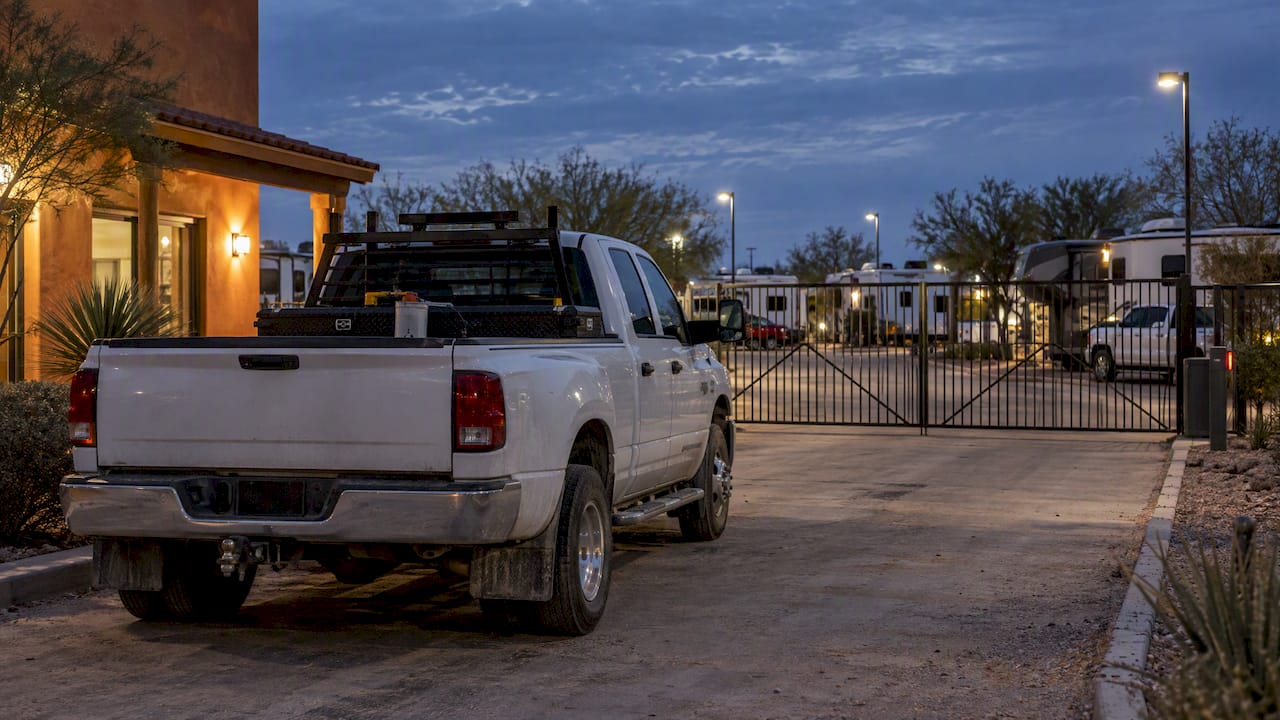
Start with a truck stop or a paid private lot built for commercial vehicles, and fall back to an authorized industrial lot or an open weigh station only when nothing else is available. Then do three things: park in a bright, visible spot near cameras or entrances, lock the cab and conceal valuables, and switch on any alarm or camera alerts. Hours of Service limits and the national parking shortage make waiting costly.
TL;DR:
- A federal survey found that 98% of nearly 11,700 drivers struggled to find safe parking, so check truck stops and paid private lots early.
- Confirm permission and local rules before entering an industrial lot; open weigh stations or officially authorized safe havens are fallback options when driving hours expire.
- Federal rules cap the work period at 14 hours, allow 11 driving hours, and require a 30 minute break within the first 8 hours.
- Choose a well lit space near cameras, staff, or other trucks, then lock the cab, hide valuables, and activate available alarms or camera alerts.
- Parking apps may show spaces, but most truck stops do not accept reservations; verify availability and legality with the lot or dispatch before committing.
Table of Contents
- Where can you park a work truck overnight?
- How do you judge a lot for security before you commit?
- What truck and cargo security measures work overnight?
- Which apps and tools help you find secure parking?
- What should you do if you cannot find legal parking before your hours run out?
- What do 30 amp and 50 amp hookups mean for work trucks?
- What policies cover long-term or extended-stay secure parking?
- How do costs compare between private lots and RV parks?
- A driver’s view: small habits that make safer nights
- Secure RV sites and lodge rooms for crews and long assignments
- FAQ
- Sources
Where can you park a work truck overnight?
Your best odds come from knowing the order of attempts before the clock runs down. Federal survey work under Jason’s Law found that 98% of nearly 11,700 surveyed truck drivers had trouble finding safe parking, so plan for a crowded lot, not an empty one.
- Truck stops and travel plazas: The first choice for lighting, staff and food, but they often fill early in the evening.
- Private lots built for commercial vehicles: Paid or reserved parking tends to sit closer to urban delivery zones and can be more tightly controlled than a public lot.
- Industrial and business lots: Loading yards and warehouse lots may work with permission. Call the property contact before you pull in, since some retail and industrial owners differ store by store, and guidance on big-box parking says to call ahead or check an app.
- Authorized emergency locations: Open weigh stations and state-designated safe havens are the lawful fallback when your hours run out.
To confirm a spot is legal, read the signs at the entrance, ask the property contact, look for local ordinance notices, and ask dispatch to confirm. If any of those say no, move on rather than hoping nobody notices.
How do you judge a lot for security before you commit?
Take a moment on arrival and run through this list in order. It works the same whether the lot is a major plaza or a small yard.
- Lighting: Look for working lights that cover your truck and the lanes around it, not just the building entrance.
- Cameras and access control: Visible cameras, gates, fencing and security patrols all signal that someone is watching.
- Natural surveillance: Spots near buildings, staffed counters and other trucks are harder to approach unseen.
- Amenities and people: Restrooms, food and on-site staff keep foot traffic steady, and steady foot traffic discourages theft.
- Regulatory signs: Check for no overnight parking notices or permit requirements, and call ahead if anything is unclear.
Rank these by what you can actually verify. A bright lot with a gate and an attendant beats a dim lot with a camera that may not be recording.
Pro Tip: Arrive before dark and walk the lot’s edges. Dead lights, cut fence sections and gaps in camera coverage are much easier to spot in daylight.
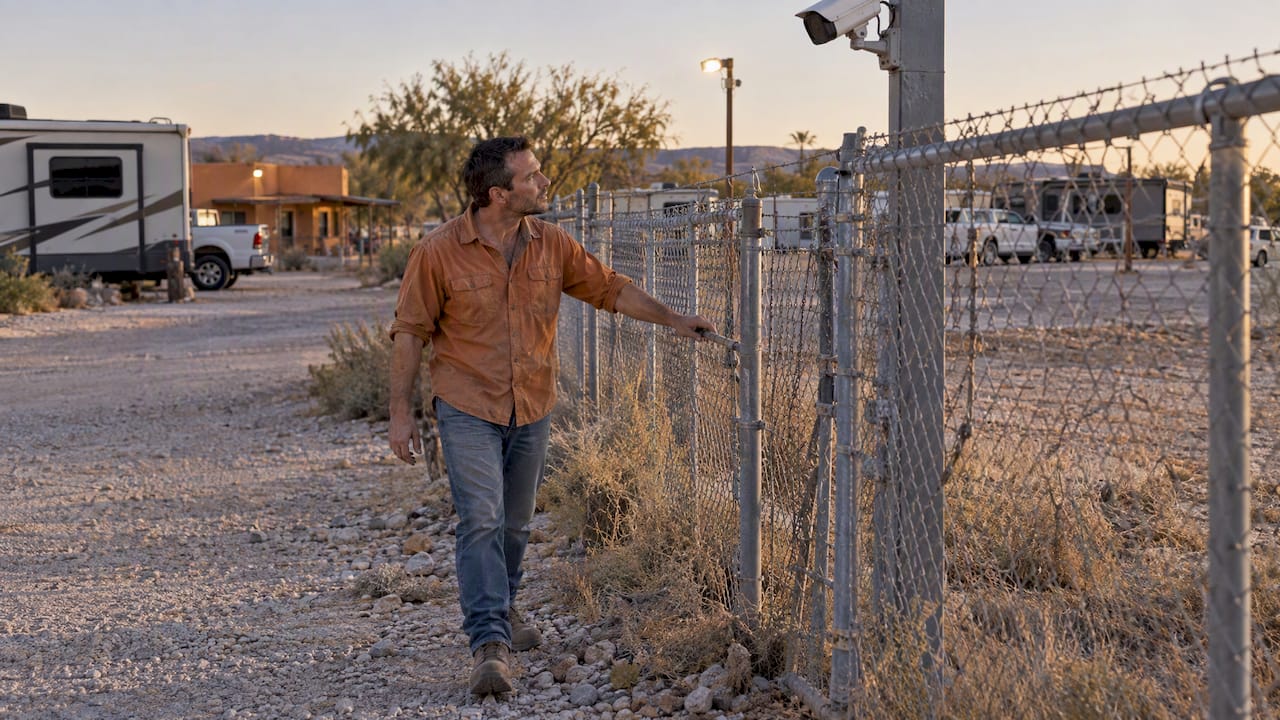
Sleeping in the cab adds its own habits: lock doors and windows, hide valuables and use window covers for privacy while choosing busy, well-lit spots.
What truck and cargo security measures work overnight?
Start with free habits, then add hardware where your risk is highest. Thieves look for easy targets, and each layer you add makes you a slower, noisier one.
- Daily habits: Lock the cab and trailer every time, remove or hide valuables, and check that toolbox locks actually latch.
- Physical deterrents: Hitch and coupler locks, heavy-duty padlocks, lockable toolboxes and keyed bed covers keep a quick grab from turning into a loss.
- Electronic monitoring: Night-vision cameras with motion alerts, LED deterrent lights and cloud storage for footage give you evidence and an early warning. Many systems install in about 15 minutes, per truck bed security guidance.
- Placement tactics: Park so trailer doors face a wall or another vehicle, point the cab toward lighting or a gate, and choose spaces near cameras or staff.
- Maintenance as deterrence: Working exterior lights, good tires and a clean, cared-for rig do not look like an easy mark.
Cloud storage and remote alerts are now standard on truck bed camera systems, so footage survives even if the device is stolen.
Daily inspections help here too. OSHA’s vehicle checklist covers brakes, lights and load securement, and a vehicle that is visibly maintained is a less attractive target. Before you leave a lot in the morning, walk around the truck once to confirm nothing was tampered with.
Which apps and tools help you find secure parking?
No single app covers every lot, so combine a few and verify before you commit your last legal hour of driving.
- Truck parking apps and databases: Use them to see lot size, amenities and, where offered, live space counts.
- Truck-aware GPS units: Route around low clearances and restricted roads so you do not burn hours on a dead end.
- Crowd-sourced driver apps: Recent check-ins and comments reveal lighting, crime reports and how full a lot gets after dark. Treat them as hints, then confirm with the lot or dispatch.
- Reservation features: Most truck stops do not take reservations, and follow-up Jason’s Law results noted that many are over capacity overnight and do not monitor parking. Use apps that list reservation-enabled private lots and call to confirm.
Public investment is slowly improving the picture. FMCSA grant awards have supported real-time space signage, truck plazas and monitored facilities. State planning documents such as Arizona’s statewide truck parking plan identify undesignated parking hotspots and call for short, mid and long term fixes. Until those projects reach your route, keep a backup plan.
What should you do if you cannot find legal parking before your hours run out?
Plan before you hit the limit. FMCSA’s Hours of Service rules give you a 14-hour work period with a maximum of 11 hours of driving and a required 30-minute break within the first 8 hours, and the details sit in 49 CFR Part 395. The agency’s driver guide to Hours of Service explains sleeper-berth patterns and short-haul exceptions that may change your options.
FMCSA guidance warns that shoulders and ramps are generally unsafe or illegal for parking. Look for an open weigh station or an authorized safe-haven site instead. If you truly have no lawful choice, run this checklist:
- Pull into the most visible, level spot you can legally reach.
- Lock the cab, secure cargo and hide valuables.
- Send dispatch or family your exact location.
- Turn on cameras, alarms and motion alerts.
- Rest rather than push on tired.
If you notice threats, suspicious activity or unsafe site conditions, contact local authorities or move to a safer lot.
What do 30 amp and 50 amp hookups mean for work trucks?
Electrical hookups matter when your overnight stop is an RV site rather than a parking lot. The two common service levels are 30 amp and 50 amp. A lower-amperage site may suit lighter loads such as a camper, a block heater or phone and tool chargers. A higher-amperage site may handle heavier loads, such as running air conditioning along with other equipment at once.
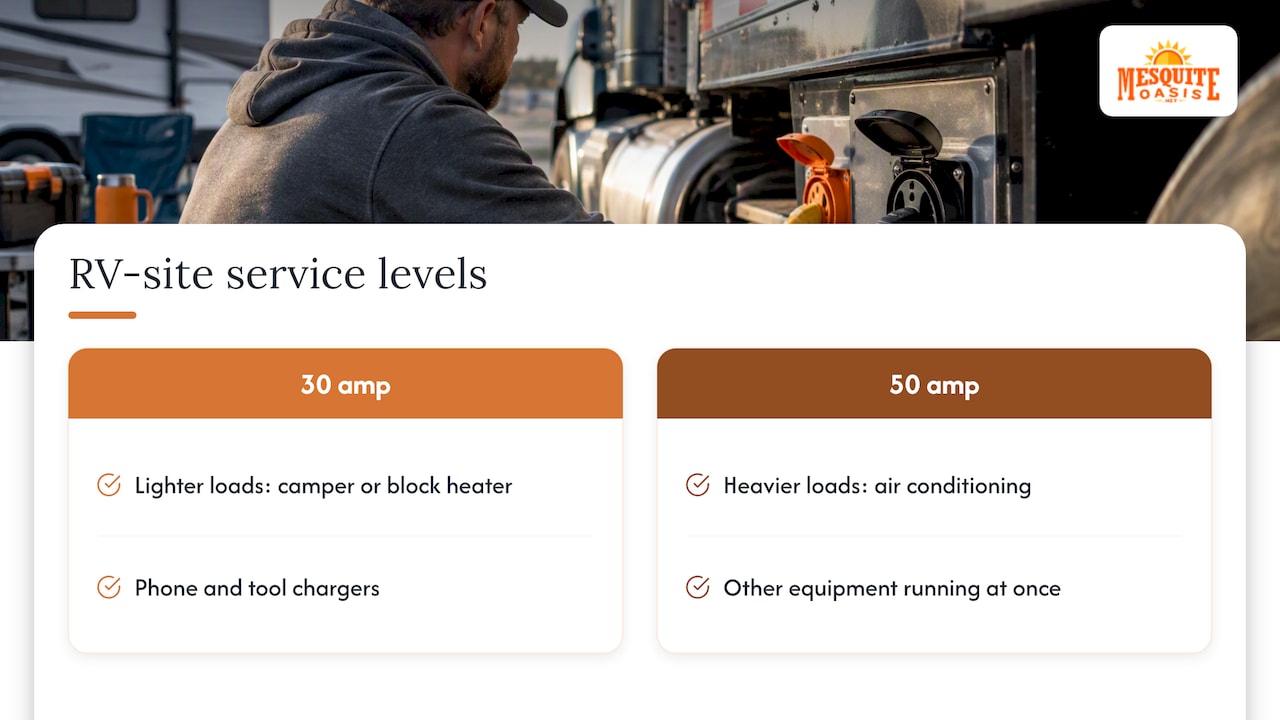
For a work truck, the pedestal matters less than your adapter and your habits. Check what plug your rig or camper uses before you arrive, carry the right adapter and a rated extension cord, and never overload a circuit by running multiple heaters and appliances at once. Overheated cords and loose connections are a fire and equipment risk.
Hookups also tie into security. A powered site lets you keep cameras, trackers and exterior lights running all night without draining your battery. Powered sites in a gated park put that equipment inside a controlled perimeter instead of a public lot.
We offer full-hookup sites with different service levels, so you can match the service to what you actually run. Ask which pedestal fits before you book, and keep your adapter in a locked toolbox rather than on the ground.
What policies cover long-term or extended-stay secure parking?
Dedicated facilities run on written rules, and knowing them upfront saves a headache. Expect to complete an application, agree to terms, and pay on a set schedule before your truck settles in. Weekly and monthly stays are the norm for crews on long assignments, and a legitimate facility spells out what it allows.
Typical protocols to look for:
- Access control: Gated entry, personal PIN codes for amenities and on-site staff make it clear who belongs on the property.
- Vehicle and length limits: Confirm your rig physically fits before you commit. Our guide to big rig length limits shows how to measure and what to ask.
- Payment and late fees: Know the billing cycle and what late charges apply, which we list on our rates page.
- Pets and guests: Pet fees and visitor rules vary, so read them before arrival.
- Terms and conduct: Review the terms and conditions so nothing surprises you after you have moved in.
For crews, block booking and one consolidated invoice keep paperwork simple. If you want to see how the online process works step by step, our walkthrough on booking an RV park site online covers it.
How do costs compare between private lots and RV parks?
Private commercial lots usually charge by the night and focus on parking alone. You get a space, sometimes with cameras, a fence or an attendant, but few amenities. That can be a fair deal for a single night on the road.
An RV park or lodge prices differently because the rate bundles a place to live with a place to park. For anything longer than a night or two, the weekly or monthly rate often works out better than stacking nightly fees, and you stop spending hours each evening hunting for a space.
Here is what we charge, so you can compare it against any lot you are considering:
| Option | Weekly | Monthly |
|---|---|---|
| 30 Amp or 50 Amp RV site | $300 per week | $795 per month |
| Single Room | $400 per week | $1,350 per month |
| Bunk Bedroom | $550 per week | $1,700 per month |
Those rates are all-inclusive, and our RV sites and lodge rooms pages list what each includes. Pet fees and late payment charges are listed separately on the rates page. When you compare, add up what a nightly lot costs over the same stretch, plus fuel and time spent searching, and weigh that against a fixed weekly or monthly price.
A driver’s view: small habits that make safer nights
Our author’s take on routines that add up.
I scout my overnight spot earlier in the day, while I still have options and daylight. I keep a short list of lots I trust and jot down which areas felt safe and which did not, so tomorrow’s decision is faster than today’s. Carriers can help by planning stops and pre-booking private lots instead of leaving drivers to improvise at 10 p.m. These habits sound small, but they remove the panic that leads to bad parking choices. I am also hopeful: funding under Jason’s Law and recent federal grant activity point toward more monitored, better-planned space.
Secure RV sites and lodge rooms for crews and long assignments
When your assignment runs weeks or months, a managed site beats a nightly search. We run a gated park in Odessa with RV sites and furnished lodge rooms, PIN-secured amenities, and a process where you apply and pay online any hour of the day.

- Gated property with personal PIN access to amenities
- Full-hookup RV sites and furnished rooms
- Online application and payment, no phone call needed
- Crew housing with consolidated monthly invoicing
Our work truck parking and lodging guide explains how crews book. When you are ready, check availability on our RV sites page or apply online.
FAQ
Where can you park a commercial vehicle overnight?
Start with truck stops, travel plazas and paid private lots designed for commercial vehicles. Industrial lots and open weigh stations can work with permission or in an emergency. Always confirm the spot is legal before you settle in.
Can you sleep in your vehicle overnight at truck stops?
Generally yes, since truck stops are built for drivers resting between shifts. Pick a lit, busy area, lock doors and windows, and keep valuables out of sight, as personal safety guidance recommends. Lots can fill quickly, so arrive early.
Do food trucks pay to park in parking lots?
Often they do, either through a lease, a permit or an agreement with the property owner. Rules vary by property and local ordinance, so ask the owner or city office before parking. Never assume a lot is free to use.
Does Walmart allow overnight parking for semi-trucks?
It depends on the store and local zoning, and many locations do not allow it. Trucking guidance says to call ahead or use an app to verify before you pull in.
Sources
- Ops
- Biden-Harris Administration Announces More Than $80 Million in Grants to Improve Highway Safety, Including Better Access to Truck Parking | FMCSA


